


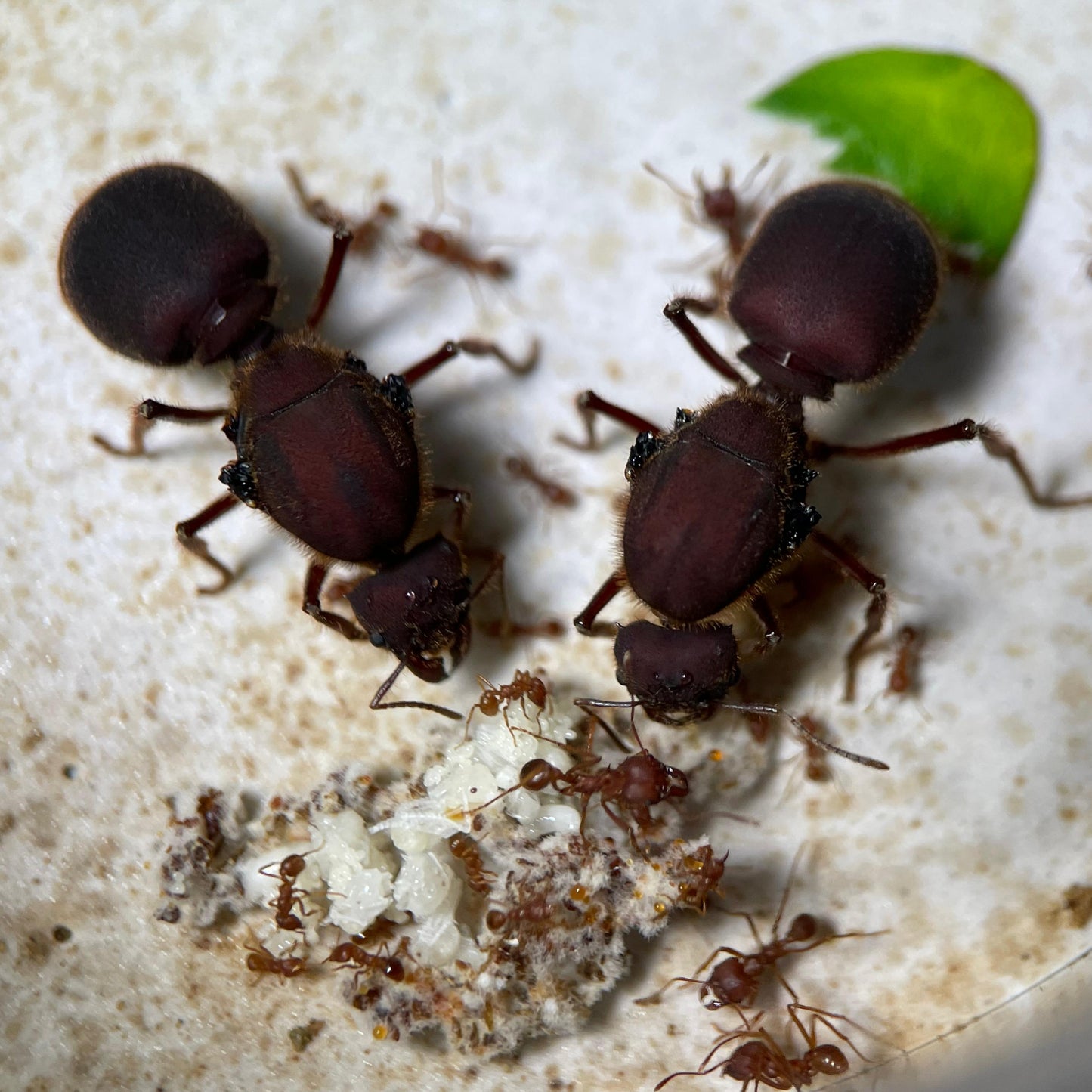
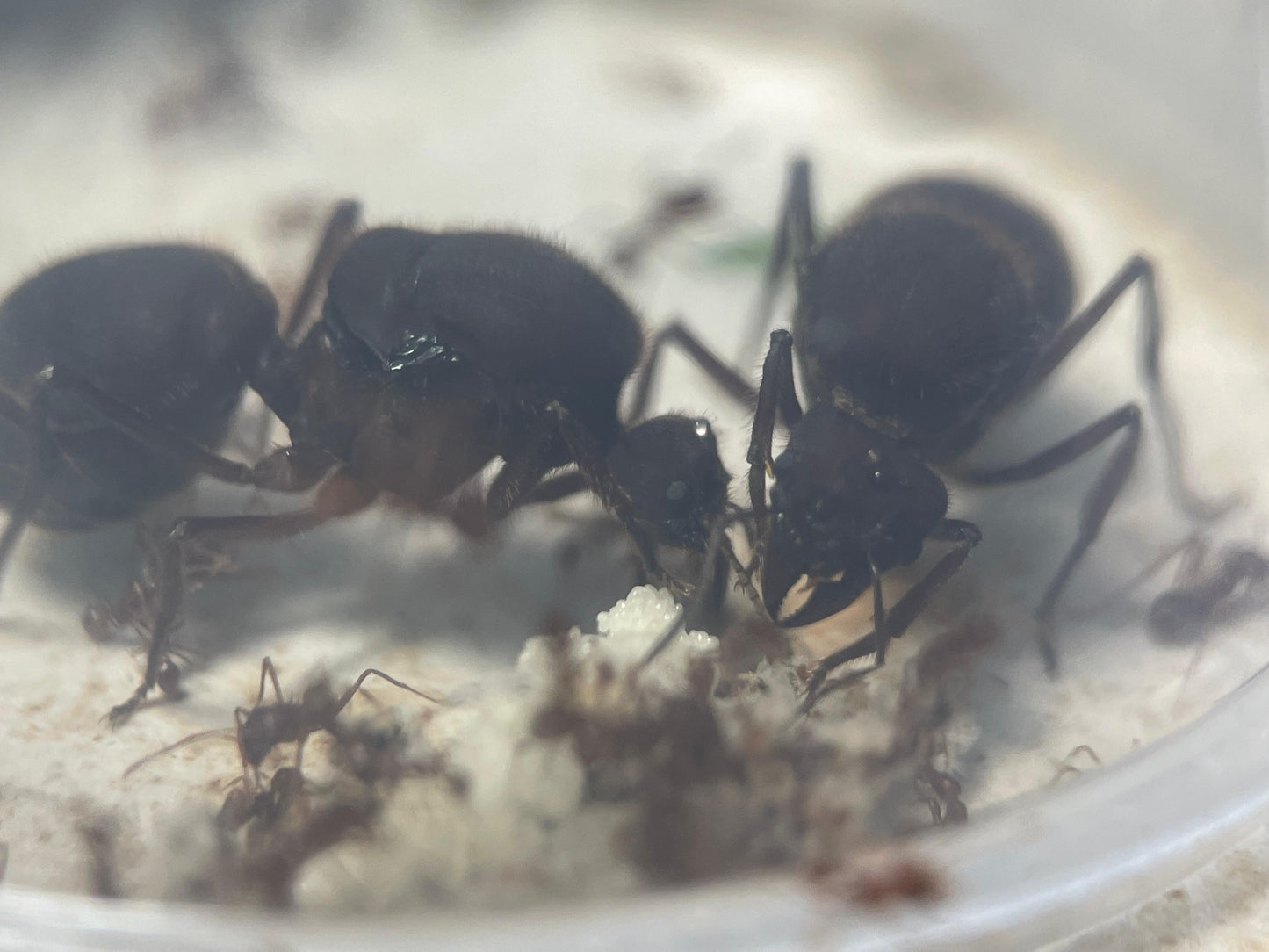
Atta texana
Atta texana
SKU:
Out of stock
Note: During the founding phase, Atta texana is especially prone to stress. Rearing succeeds best in a darkened environment with limited space at 24–28 °C. From approx. 500 workers onward, the colony becomes more robust. In winter, a slight diapause may occur – activity and food intake then decrease significantly. It is essential to always have replacement fungus on hand when rearing queens. This can be destroyed during shipping or for other reasons.
Couldn't load pickup availability



Download

Description
Name: Atta texana
Direct Origin: Magnolia, Texas
Queen: approx. 28 – 30 mm
Workers: polymorphic – from approx. 2 to 16 mm
Food: Leaves, flowers, rolled oats – for fungus cultivation. The fungus is the colony's actual food source.
Humidity:
• Arena: 50 – 70%
• Fungus chamber: 90 – 100%
Temperature:
• Arena: 22 – 28 °C
• Fungus chamber: 24 – 26 °C
Winter Dormancy: No
Nest Type: Specialized fungus nests with ventilation, high humidity, and temperature control
Colony Size: up to 5 million workers in the wild, usually significantly smaller in captivity
Advantages and Disadvantages of Atta texana
Advantages:
Atta texana is one of the most fascinating ant species of all. The colony organizes itself in a highly complex manner, with clear division of labour and impressive leaf-cutting activity. The symbiotic fungus farming is unique – perfect for advanced keepers with a biological interest.
Disadvantages:
Keeping this species is extremely demanding: high humidity, stable temperatures, special nest design, fungus care, and a large amount of food are all necessary. Large colonies require a lot of space. This species is not suitable for beginners.
Care
Atta texana requires a multi-chamber nest system, consisting of:
- a chamber with constantly high humidity (90 – 100%) and temperature (24 – 26 °C)
- a chamber for disposing of old fungus mass (keep separate!)
- a chamber for fresh plant material
The animals must not come into direct contact with water, but need very high humidity. Ventilation must nonetheless be very good – the risk of mould is high. 3D-printed or custom-built nests with separate modules are ideal.
Feeding
Atta texana does not eat solid matter itself, but uses cut plant material for fungus cultivation.
Suitable are:
- leaves from blackberries, raspberries, oaks, roses, etc.
- flowers, hibiscus, rose petals
The fungus is extremely sensitive – therefore do not give proteins or sugary substances as with other species.
Winter Dormancy / Diapause
Atta texana does not undergo winter dormancy – tropical conditions are required year-round.
An interruption in fungus care leads to colony collapse.
Temperature: 24 – 26 °C constant
Humidity in the fungus chamber: 90 – 100%