

Camponotus cruentatus
Camponotus cruentatus
SKU:
Out of stock
Couldn't load pickup availability


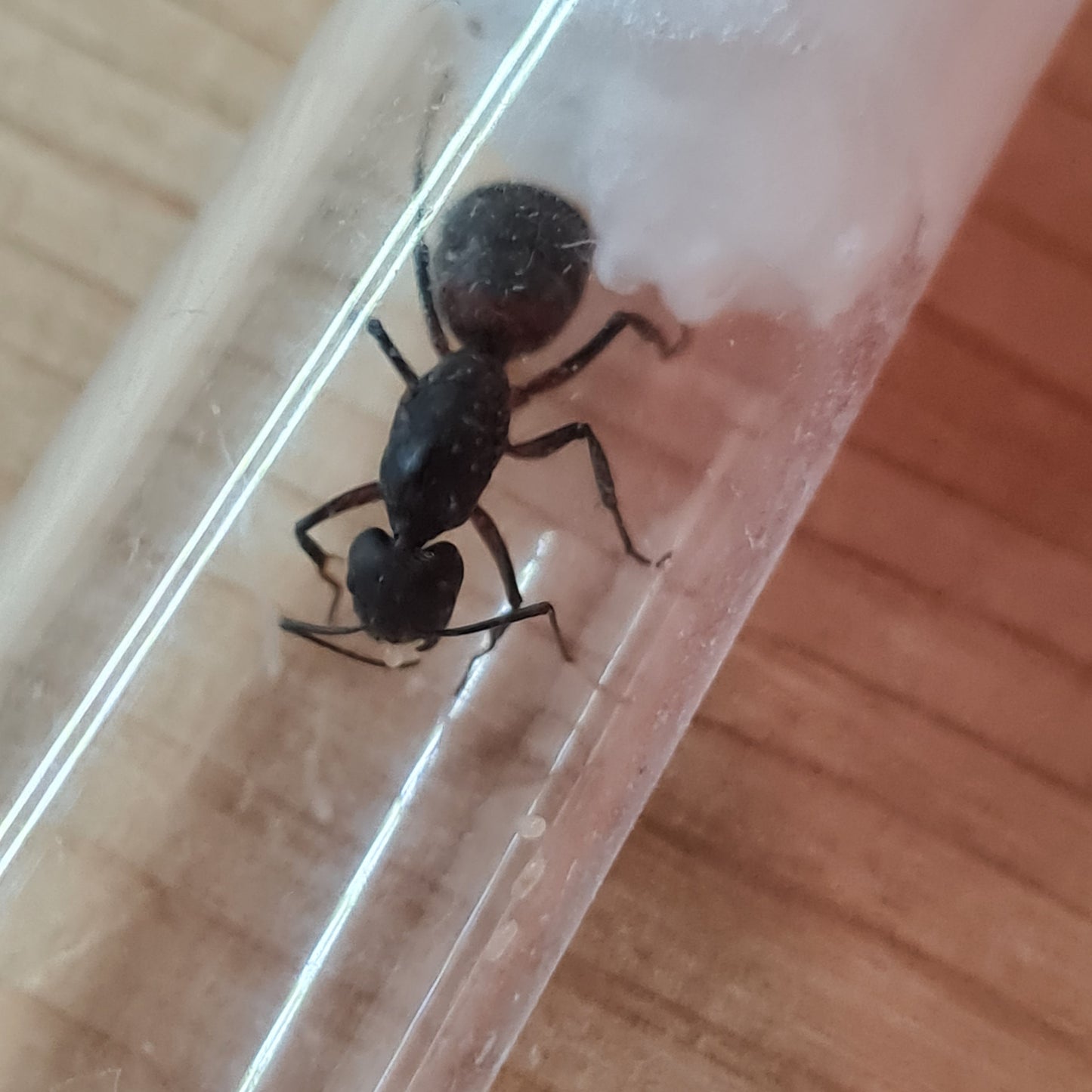
Description
Name: Camponotus cruentatus
Origin: Southern Europe – mainly Spain, Portugal, Southern France
Queen: approx. 14 – 16 mm
Workers: approx. 6 – 12 mm (polymorphic)
Food: Carbohydrates (honey, sugar water, maple syrup), proteins (insects such as flies, crickets, cockroaches)
Humidity:
• Arena: 30 – 50 %
• Nest: 50 – 70 %
Temperature:
• Arena: 24 – 30 °C
• Nest: 26 – 30 °C
Winter Dormancy: Yes, approx. 3 – 4 months at 10 – 15 °C
Nest Type: Ytong, plaster, 3D, or sand-clay nests with good ventilation
Colony Size: approx. 2,000 – 5,000 workers
Advantages and Disadvantages of Camponotus cruentatus
Advantages:
One of the largest and most attractive European Camponotus species, with striking black-and-red coloring. Very robust, heat-loving, and active in the arena. The pronounced polymorphism provides varied and interesting observation.
Disadvantages:
Slow-growing during the founding phase, so patience is required. Later on, they need more space and consistently warm conditions. Can react defensively when disturbed.
Care
A test tube nest with a small arena is sufficient for founding. As the colony grows, a large, well-ventilated nest with slight moisture and an arena of at least 20×20 cm is recommended. They are very active, enjoy roaming space, and benefit from climbing structures.
Feeding
Offer proteins in the form of insects (e.g. crickets, flies, cockroaches) every 2–3 days.
Winter Dormancy
Camponotus cruentatus requires a winter dormancy period of approx. 3–4 months at 10 – 15 °C