

Camponotus nicobarensis
Camponotus nicobarensis
SKU:
Out of stock
Couldn't load pickup availability


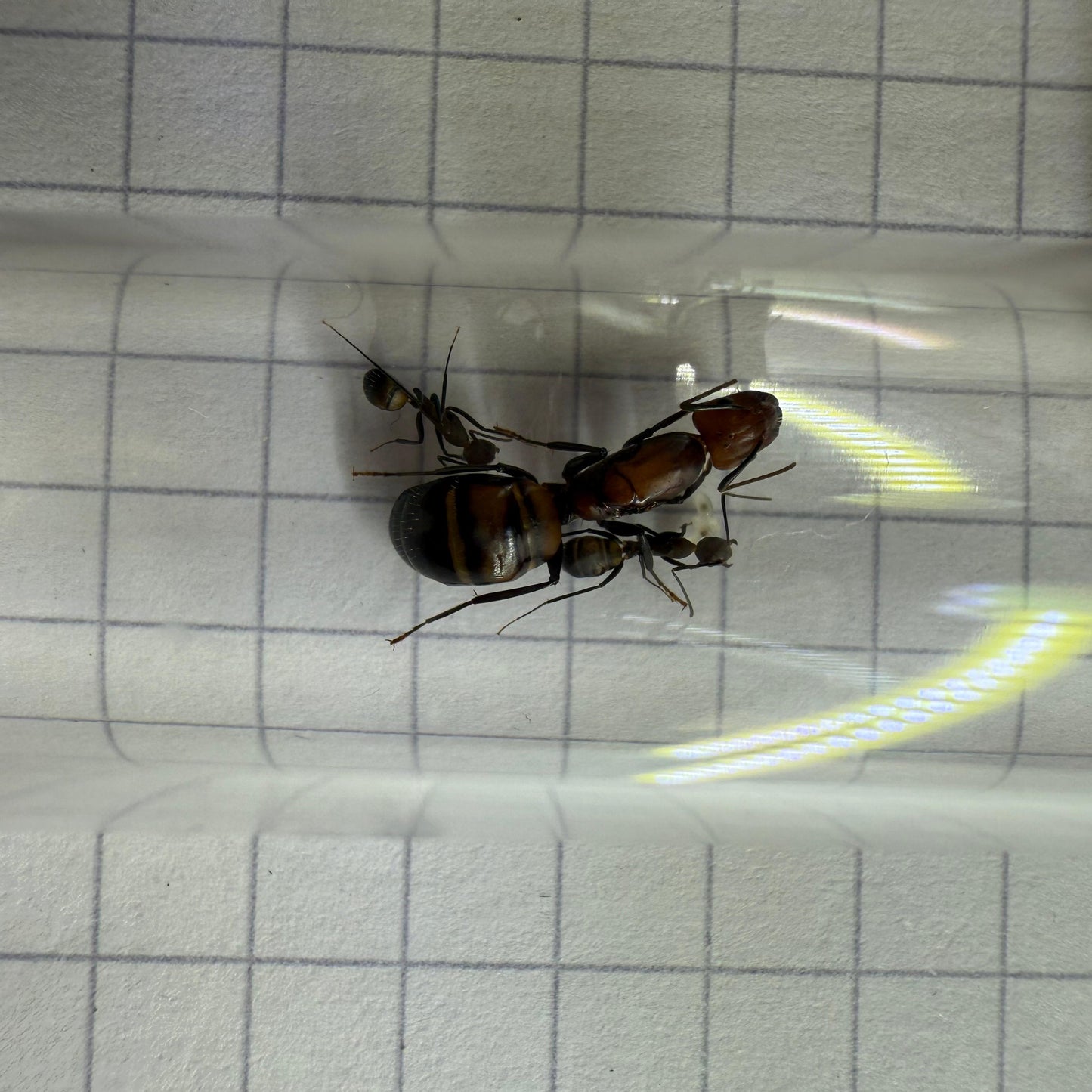
Description
Name: Camponotus nicobarensis
Origin: Southeast Asia (including China, India, Thailand)
Queen: approx. 12 – 14 mm
Workers: approx. 6 – 10 mm
Food: Carbohydrates (e.g. honey, sugar water, agave syrup), proteins (feeder insects, e.g. cockroaches, flies, crickets)
Humidity:
Arena: 40 – 60%
Nest: 60 – 80%
Temperature:
Arena: 24 – 28 degrees
Nest: 24 – 28 degrees
Winter Dormancy: No
Nest Type: We recommend Ytong, plaster, or 3D nests with good ventilation and areas that can be moistened!
Colony Size: approx. 5,000 – 10,000 workers
Advantages and Disadvantages of Camponotus nicobarensis:
Advantages:
Camponotus nicobarensis is an extremely active and colorful species that loves to explore and is often visible outside the nest. It grows quickly, is robust, and shows fascinating social behavior. Ideal for beginners.
Disadvantages:
Due to rapid colony development, they soon need more space. They may also attempt to escape if kept too dry. Good escape-proofing is therefore important.
Care:
Camponotus nicobarensis is easy to care for.
A test tube nest in a small arena (10×10 cm) is sufficient at first. As the colony grows, it should be moved to a larger nest and an arena of at least 20×20 cm. They are active both day and night, but especially at dusk and in low light.
Feeding:
Camponotus nicobarensis reliably accepts food.
Offer proteins (e.g. cockroaches, flies, crickets) every 3 – 4 days – ideally frozen or scalded to guard against parasites. Carbohydrates are reliably accepted.