


Camponotus sp. Tunisia
Camponotus sp. Tunisia
SKU:
Out of stock
Couldn't load pickup availability


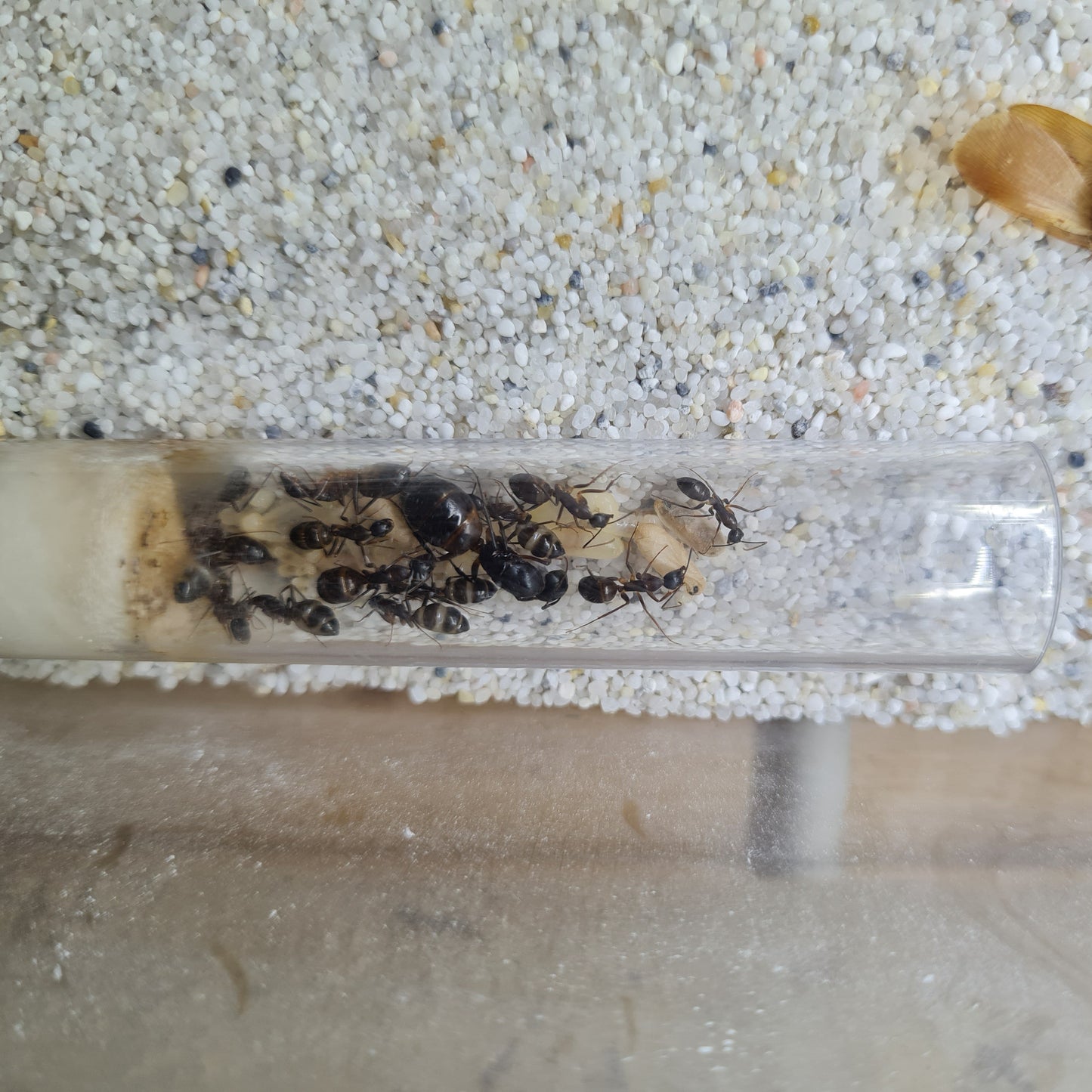
Description
Name: Camponotus sp. (Tunisia)
Origin: North Africa (Tunisia)
Queen: approx. 14 – 16 mm
Workers: approx. 6 – 9 mm
Food: Carbohydrates (honey, sugar water, maple syrup), proteins (insects such as flies, crickets, cockroaches)
Humidity:
• Arena: 30 – 50 %
• Nest: 50 – 70 %
Temperature:
• Arena: 24 – 30 °C
• Nest: 26 – 30 °C
Winter Dormancy: Diapause at approx. 18 – 20 °C
Nest Type: Ytong, plaster, or 3D nests with dry and slightly moist areas
Colony Size: approx. 1,000 – 5,000 workers
Advantages and Disadvantages of Camponotus sp. (Tunisia)
Advantages:
A heat-loving, robust, and striking species that is very rewarding to observe. Shows calm behavior and grows moderately fast when temperature and food are right.
Disadvantages:
Needs a lot of warmth and a relatively dry arena. Brood development is often slow in the initial phase. Not suitable for cool living spaces without an additional heat source.
Care
A test tube nest with a small arena (10×10 cm) is sufficient during the founding phase. Later, you can move to a larger, well-ventilated Ytong, plaster, or 3D nest. An arena of at least 20×20 cm is recommended. This species is mostly active during the day and shows interesting foraging and transport behavior.
Feeding
Offer proteins such as dead or scalded insects (flies, crickets, cockroaches) every 3–4 days. Carbohydrate sources (honey, sugar water) should always be available and changed regularly (at least once a week). Activity and food intake increase noticeably at higher temperatures.
Winter Dormancy / Diapause
A short resting phase (diapause) at 18–20 °C, during which activity and brood volume decrease.