
Camponotus sylvaticus
Camponotus sylvaticus
SKU:
Out of stock
Couldn't load pickup availability
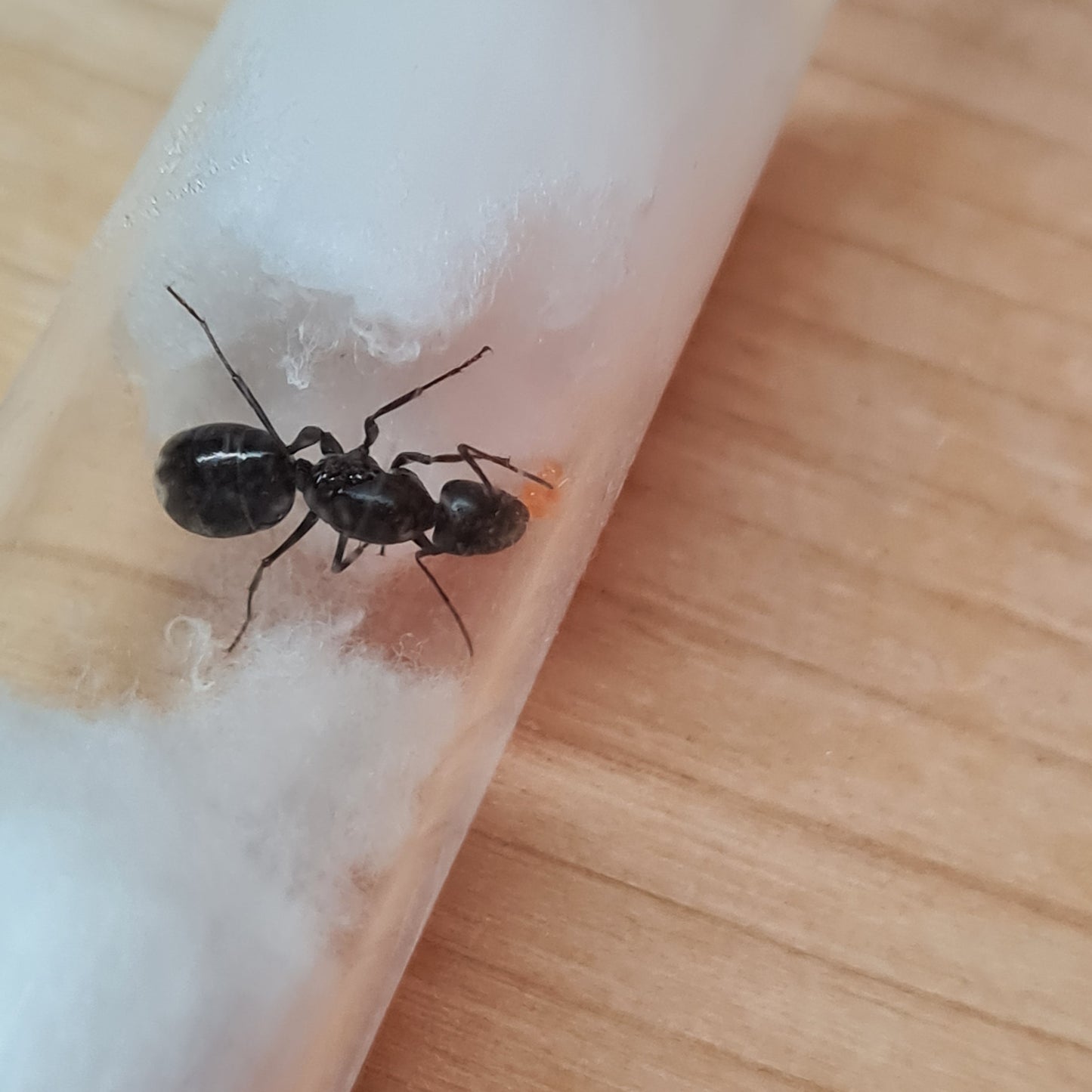
Description
Name: Camponotus sylvaticus
Origin: Southern Europe (Spain, Italy, Southern France)
Queen: approx. 13 – 15 mm
Workers: approx. 6 – 10 mm (polymorphic)
Food: Carbohydrates (honey, sugar water, maple syrup), proteins (insects such as flies, crickets, cockroaches)
Humidity:
• Arena: 30 – 50 %
• Nest: 50 – 70 %
Temperature:
• Arena: 24 – 28 °C
• Nest: 24 – 28 °C
Winter Dormancy: Yes, approx. 3 – 4 months at 10 – 15 °C
Nest Type: Ytong, plaster, 3D, or sand-clay nests with slight moistening
Colony Size: approx. 1,000 – 5,000 workers
Advantages and Disadvantages of Camponotus sylvaticus
Advantages:
An attractive, blackish-brown colored Camponotus species with pronounced polymorphism. Robust, heat-loving, and rewarding to observe. Colonies grow moderately fast under optimal conditions and are easy to manage.
Disadvantages:
Brood growth tends to be slow during the founding phase – patience is required. Warmth is crucial; development stagnates in conditions that are too cool.
Care
A test tube nest with a small arena is suitable during the founding phase. Later, a well-ventilated nest (e.g. Ytong or plaster) with a moist nest chamber should be used. An arena of at least 20×20 cm is recommended, and climbing opportunities provide enrichment.
Feeding
Offer proteins (insects such as crickets, cockroaches, flies) every 2–3 days. Carbohydrates (honey, sugar water) should be permanently available and changed regularly (at least once a week).
Winter Dormancy
Camponotus sylvaticus requires a winter dormancy period of approx. 3–4 months at 10 – 15 °C.