


Cataglyphis rosenhaueri
Cataglyphis rosenhaueri
SKU:
Out of stock
Couldn't load pickup availability


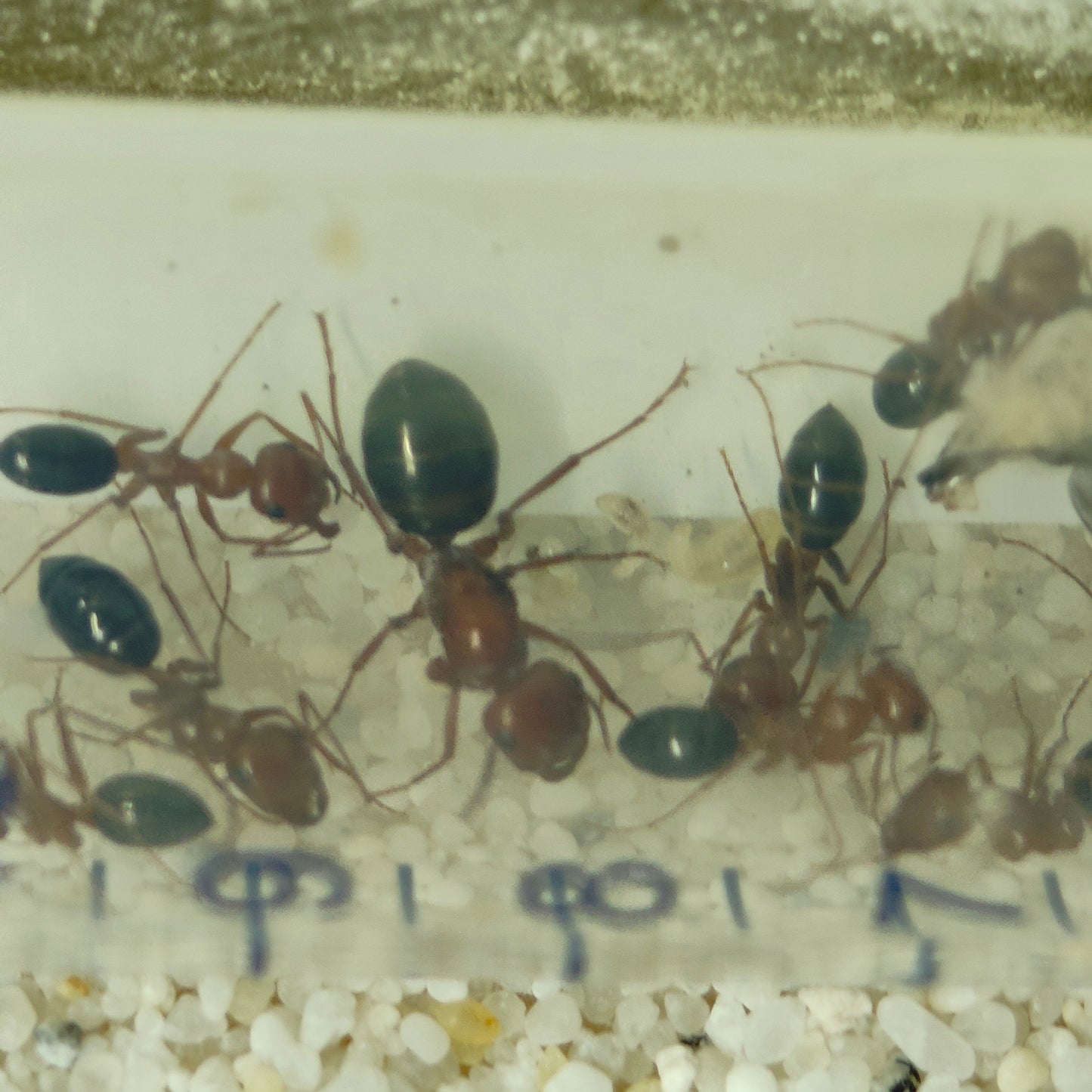
Description
Name: Cataglyphis rosenhaueri
Origin: Spain
Queen: approx. 10 – 11 mm
Workers: approx. 6 – 9 mm
Food: Carbohydrates (e.g. honey, sugar water), proteins (insects such as flies, crickets, roaches)
Humidity:
• Arena: 20 – 40 %
• Nest: 30 – 50 %
Temperature:
• Arena: 26 – 35 °C
• Nest: 28 – 32 °C
Winter Dormancy: Yes, Southern European
Nest Type: Sand-clay nests, plaster or 3D nests with dry zones are very well suited
Special feature: Compared to larger Cataglyphis species such as C. nodus, C. rosenhaueri shows weaker polymorphism, but is just as fast and heat-loving
Advantages and Disadvantages of Cataglyphis rosenhaueri
Advantages:
Cataglyphis rosenhaueri is a fast, day-active desert ant from the Iberian Peninsula. It is thermophilic and stays active even in the blazing midday heat, when other insects have long since retreated. Its more compact size and lower polymorphism make it an elegant, easy-to-observe alternative to larger Cataglyphis species.
Disadvantages:
This species requires very warm, dry conditions – the animals tolerate excessive humidity or low temperatures poorly. When disturbed, they react hectically and very quickly – suitable for beginners with a steady hand, but not for clumsy handling.
Care
Cataglyphis rosenhaueri is specialized for heat and dryness.
During the founding phase, a test tube with dry cotton and a small arena is suitable.
Later, a well-ventilated sand-clay or 3D nest with multiple temperature zones is recommended.
The arena should be generously sized (from 20×20 cm) and absolutely escape-proof, as the species is very fast and agile.
This species is especially day-active and hunts live insects very dynamically – ideal for keepers who want to observe during the day.
Feeding
Very active – also hunts live prey:
• Protein every 2–3 days such as small flies, roaches, crickets
• Offer carbohydrates like sugar water or honey permanently – ideally in small feeders that don't leak. In very warm climates, food intake can increase significantly.