
Iridomyrmex anceps
Iridomyrmex anceps
SKU:
Out of stock
Couldn't load pickup availability
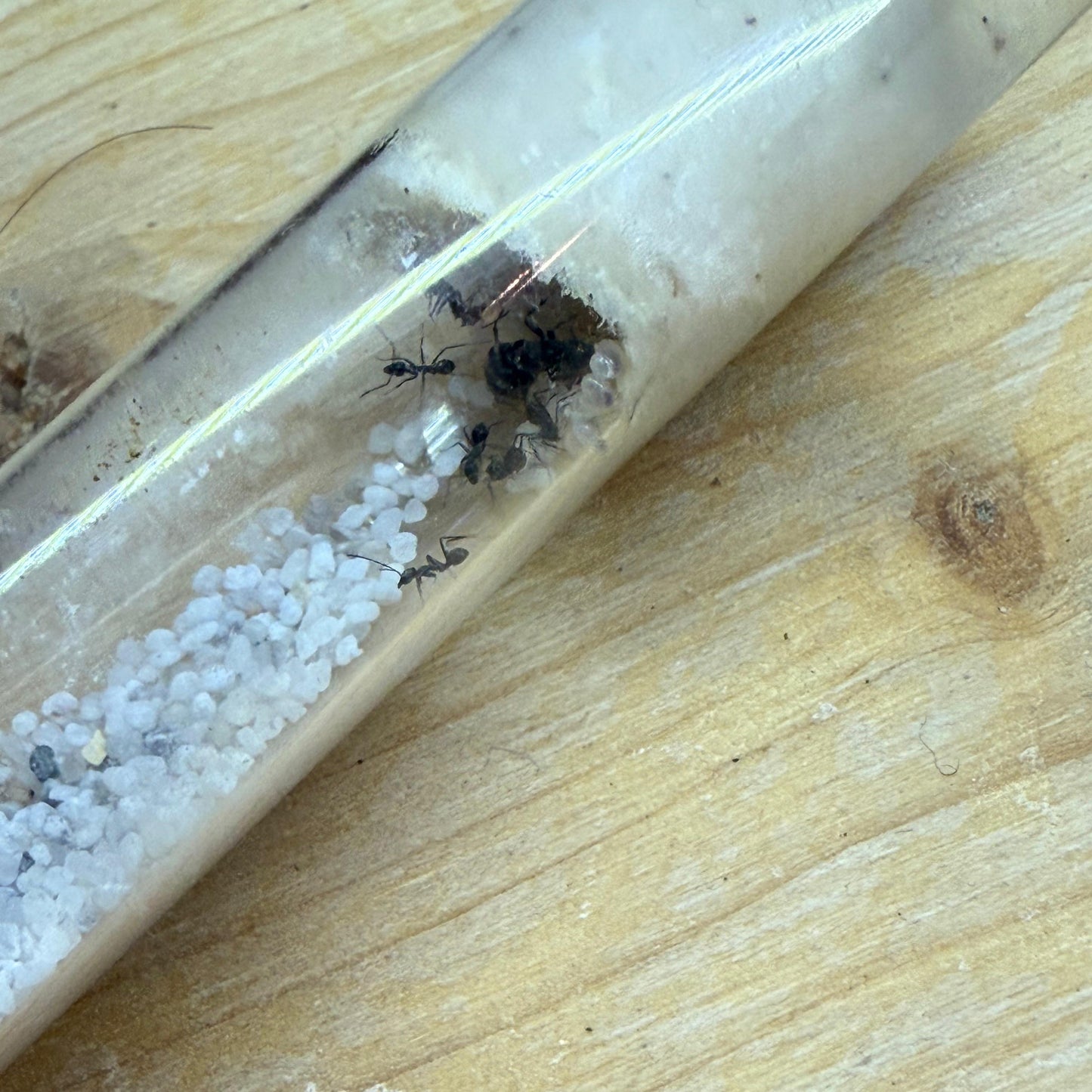
Description
Name: Iridomyrmex anceps
Origin: Australia, New Guinea
Queen: approx. 8 – 9 mm
Workers: approx. 3 – 5 mm
Food: Carbohydrates (honey, sugar water, maple syrup), proteins (small insects such as flies, crickets, cockroaches)
Humidity:
• Arena: 30 – 50 %
• Nest: 50 – 70 %
Temperature:
• Arena: 24 – 30 °C
• Nest: 26 – 30 °C
Winter Dormancy: No
Nest Type: Aerated concrete (Ytong), plaster, acrylic, or 3D-printed nests with good ventilation
Colony Size: Very large – several thousand to tens of thousands of workers possible
Advantages and Disadvantages of Iridomyrmex anceps
Advantages:
This species is extremely active, very food-motivated, and displays fascinating trail-building and hunting behaviour. It grows quickly and is robust in captivity when conditions are right. No winter dormancy needed – so it can be observed year-round.
Disadvantages:
Very prone to escaping, as the workers are small, fast, and skilled climbers. High space and food requirements as the colony grows. Due to the rapid growth, keeping this species can quickly become demanding.
Care
During the founding phase, a test tube with a small arena is sufficient. Later they need a larger, well-ventilated nest and plenty of roaming space, as they are constantly active. Aerated concrete (Ytong), plaster, or modular 3D nests are well suited. Escape-proofing (PTFE, talcum) is essential.
Feeding
Very fond of protein and carbohydrates:
• Offer small insects (e.g. flies, crickets, cockroaches) every 2–3 days
Food requirements increase significantly with larger colonies.
Winter Dormancy
Iridomyrmex anceps requires no winter dormancy.