


Messor barbarus
Messor barbarus
SKU:
Out of stock
Couldn't load pickup availability


Description
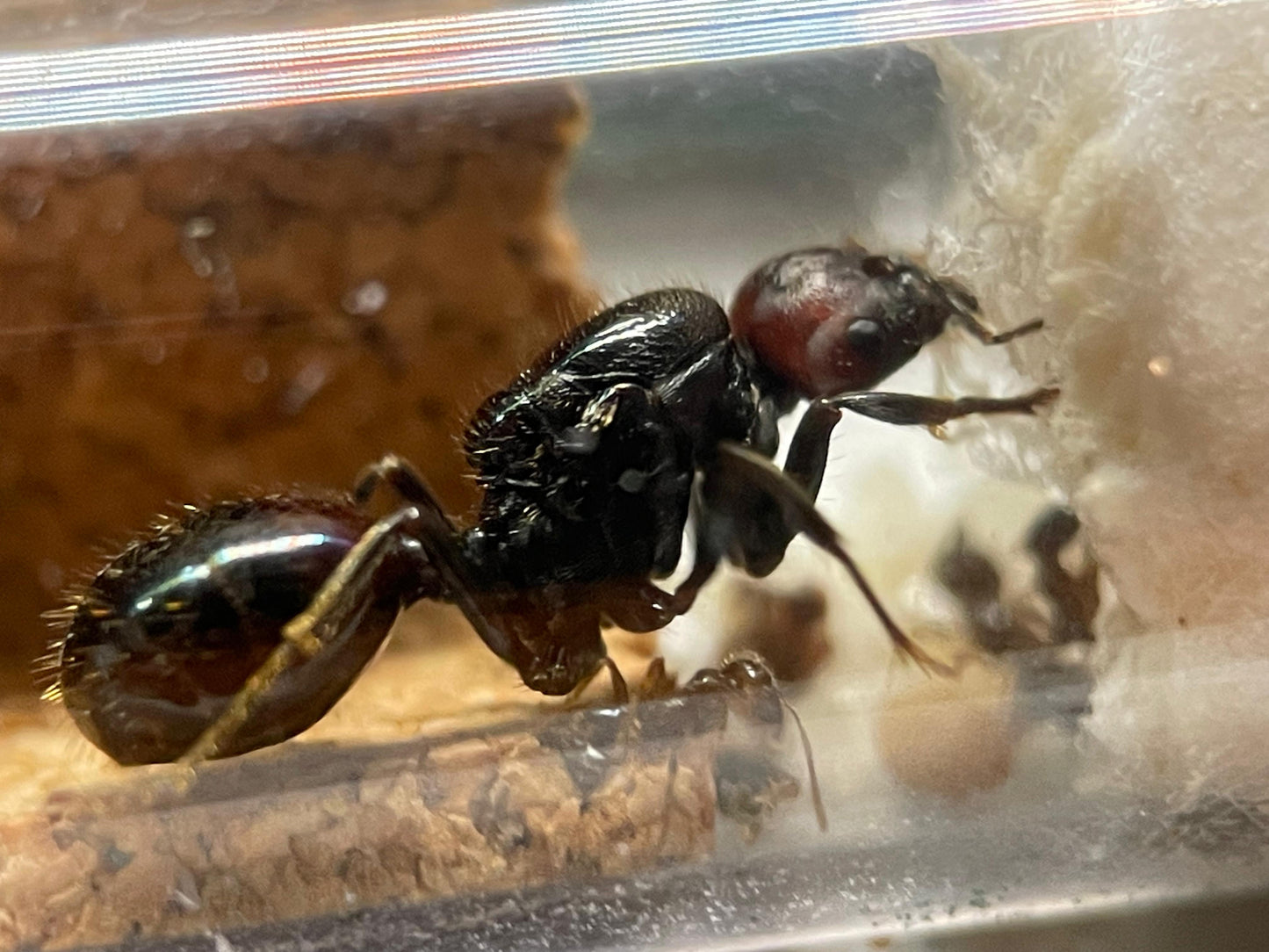
Name: Messor barbarus
Origin: Southwestern Europe and North Africa (including Spain, Portugal, Southern France, Morocco)
Queen: approx. 15 – 16 mm
Workers: approx. 3 – 14 mm, strongly polymorphic (minor to major workers in all transitional forms)
Food: Seeds and grains (harvester ants), plus carbohydrates (honey, sugar water) and occasionally protein (small insects)
Humidity:
Arena: 30 – 50%
Nest: 50 – 70%
Temperature:
Arena: 25 – 30 degrees
Nest: 23 – 28 degrees
Winter Dormancy: Yes, approx. November to March at cooler temperatures (approx. 8 – 15 degrees)
Nest Type: Dry nests made of plaster, aerated concrete (Ytong), or sand with enough space for grain storage
Colony Size: several thousand to over 10,000 workers
Advantages and Disadvantages of Messor barbarus:
Advantages:
Messor barbarus is one of the most popular species for beginners. Their behaviour as harvester ants is fascinating: seeds are collected, husked, and processed into a kind of "ant bread". A robust, low-maintenance species with fascinating social behaviour.
Disadvantages:
The founding phase can be demanding and requires patience. From a certain colony size onward, sufficient space is needed for the characteristic grain stores.
Care:
From approx. 200 workers onward, this species is easy to keep. At first, a test tube setup with a small arena is enough; later it should be expanded to a nest with a grain chamber and an arena of at least 20×20 cm.
Feeding:
Their main food is seeds and grains (grass and weed seeds, various commercially available seeds). Also offer carbohydrates and protein occasionally.
Winter Dormancy:
Messor barbarus requires a classic winter dormancy period from November to March at approx. 8 – 15 degrees. No brood is raised during this time.