


Monomorium chiense
Monomorium chiense
SKU:
5 in stock
Couldn't load pickup availability


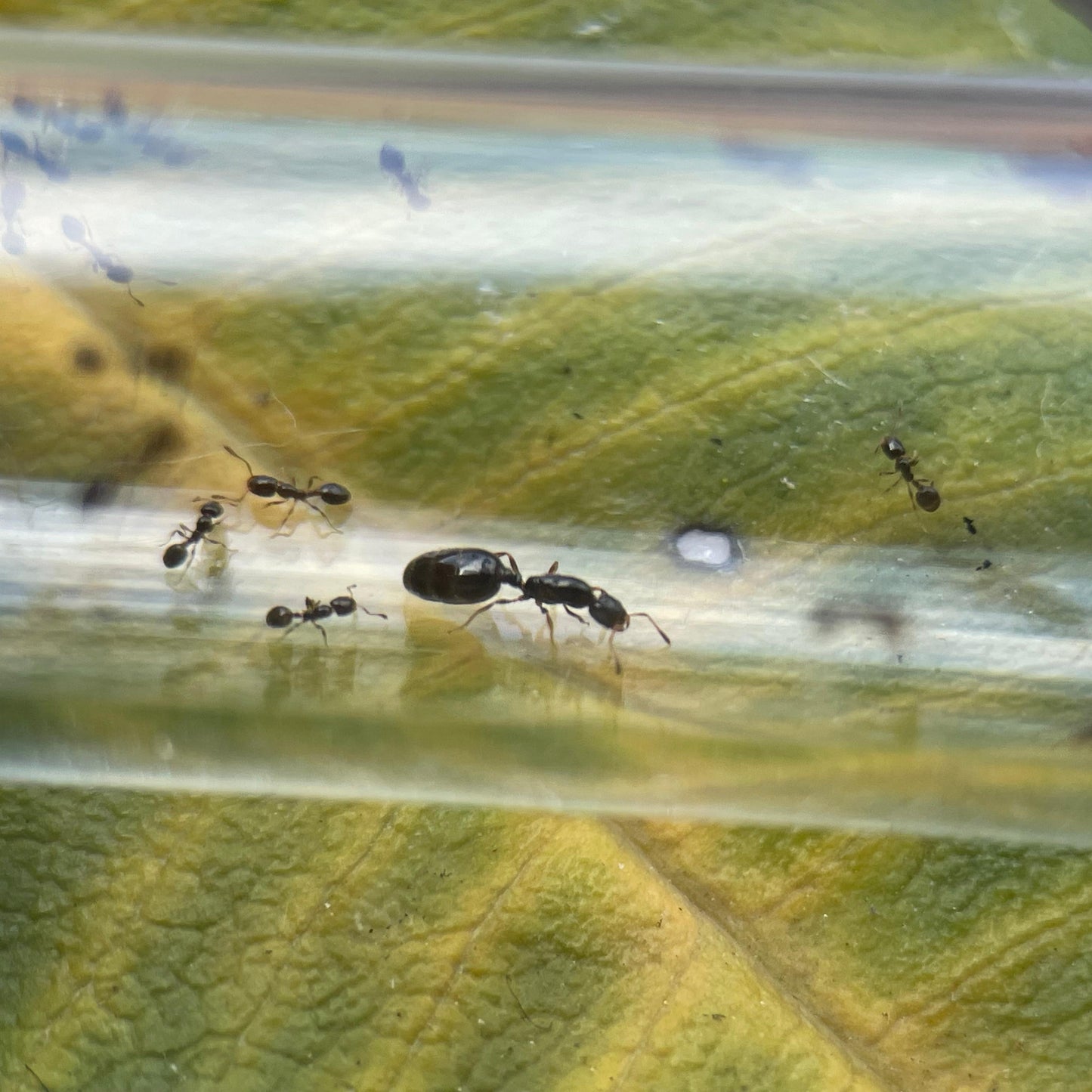
Description
Name: Monomorium chinense
Origin: East Asia (mainly China)
Queen: approx. 5 – 6 mm
Workers: approx. 2 – 3 mm
Food: carbohydrates (e.g. honey, sugar water), protein (small insects such as fruit flies, springtails)
Humidity:
• Arena: 40 – 60 %
• Nest: 50 – 70 %
Temperature:
• Arena: 22 – 26 °C
• Nest: 24 – 28 °C
Winter Dormancy: No
Nest Type: Plaster, aerated concrete (Ytong) or acrylic/3D-printed nests with small chambers are very well suited
Colony Size: Up to 10,000 workers
Advantages and disadvantages of Monomorium chinense
Advantages:
Monomorium chinense is extremely small, very active, and shows exciting swarming behaviour. The colony grows quickly and is very food-driven. Watching them at high colony density is especially fascinating. Ideal for experienced keepers who enjoy observing tiny species.
Disadvantages:
Because of their small size, strong escape-proofing is essential – they find gaps easily. Colony size can quickly become overwhelming. They also tend to be light-shy and skittish when disturbed.
Care
Monomorium chinense is easy to keep with suitable escape-proofing and a small amount of food. During the founding phase, a test tube with a mini arena (approx. 10×10 cm) is sufficient. Later, tightly structured nests with many small chambers are recommended, e.g. plaster or acrylic with micro-drilled holes. The arena should be at least 20×20 cm and completely sealed.
They are active day and night and show especially interesting behaviour in larger colonies.
This species is also well suited for permanent housing in test tubes.
Feeding
This species is very voracious.
Offer protein (e.g. fruit flies, springtails, soft-bodied insects) every 2–3 days.