

Myrmica cf. rubra
Myrmica cf. rubra
SKU:
Out of stock
Couldn't load pickup availability

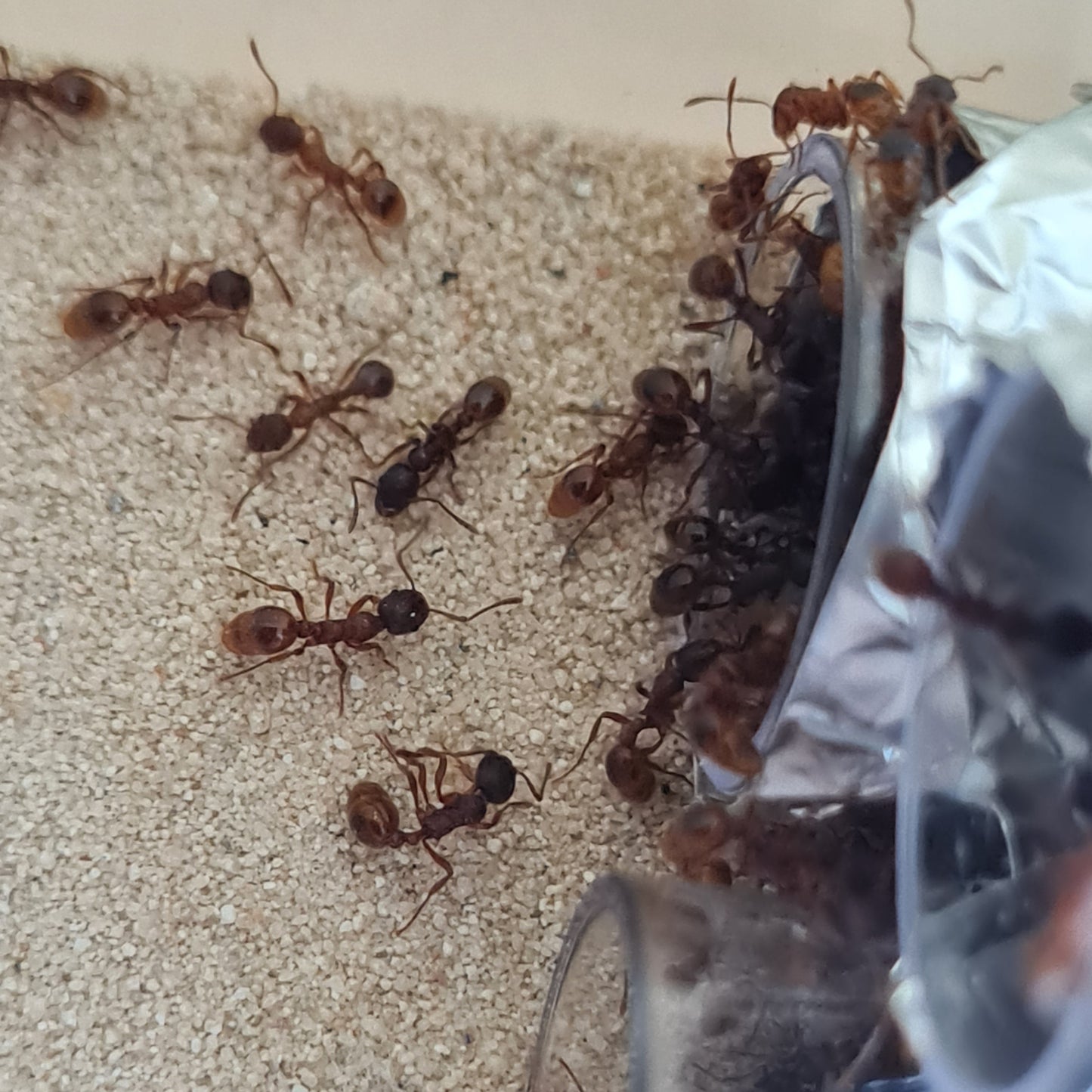
Description
Name: Myrmica cf. rubra
Origin: Germany
Queen: approx. 7 – 9 mm
Workers: approx. 4 – 6 mm
Food: carbohydrates (e.g. honey, sugar water), protein
Humidity:
• Arena: 40 – 60 %
• Nest: 60 – 80 %
Temperature:
• Arena: 20 – 24 °C
• Nest: 22 – 26 °C
Winter Dormancy: Yes
Nest Type: Plaster, aerated concrete (Ytong), or sand-clay nests are well suited
Colony Size: approx. 500 – 2,000 workers
Advantages and disadvantages
Advantages:
Myrmica cf. rubra is very adaptable, robust, and shows interesting social behaviour. It lives in moist habitats (forest, meadows) and is a great species for beginners interested in native species. It appears less hectic than smaller Tetramorium species.
Disadvantages:
Colonies remain relatively small compared to others, which some keepers find less impressive. They are also sensitive to high heat and dryness. Humid conditions must be kept constant during care.
Care
Myrmica cf. rubra is fairly easy to care for but requires constant humidity and moderate temperatures. A test tube nest with a mini arena (10×10 cm) is sufficient for founding. Later, a well-ventilated nest made of plaster, aerated concrete (Ytong), or sand-clay, along with an arena of at least 20×20 cm, is recommended.
The species is active during the day, especially in spring and autumn, and is easy to observe at moderate temperatures.
Feeding
This species is undemanding but interested – protein in the form of small insects (e.g. ant pupae, flies, springtails) should be offered every 3–4 days.
Winter Dormancy
Myrmica cf. rubra requires a classic winter dormancy of about 4 – 5 months.
From November to March, the colony should be kept at approx. 3 – 6 °C.