


Pheidole nodus
Pheidole nodus
SKU:
Out of stock
Couldn't load pickup availability

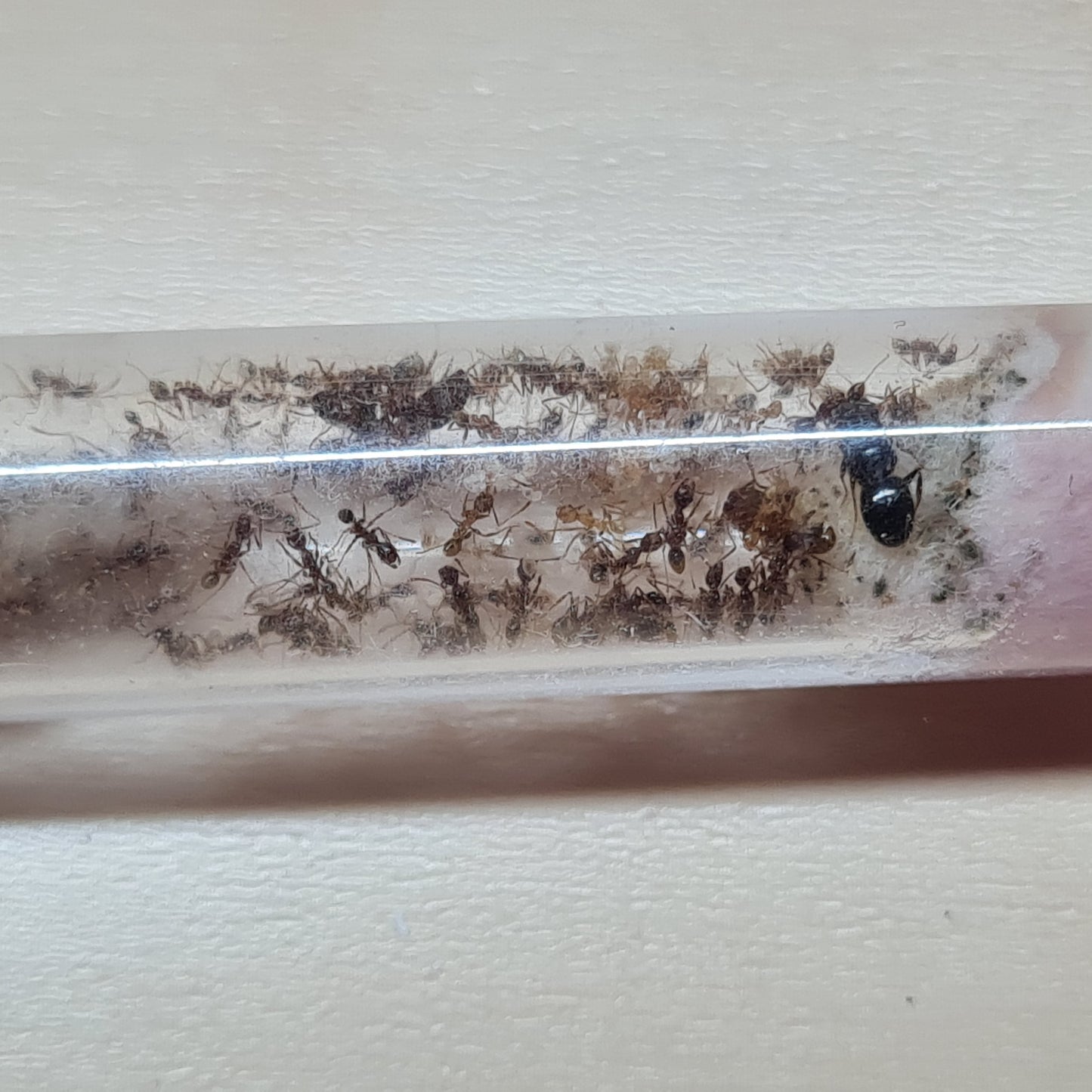
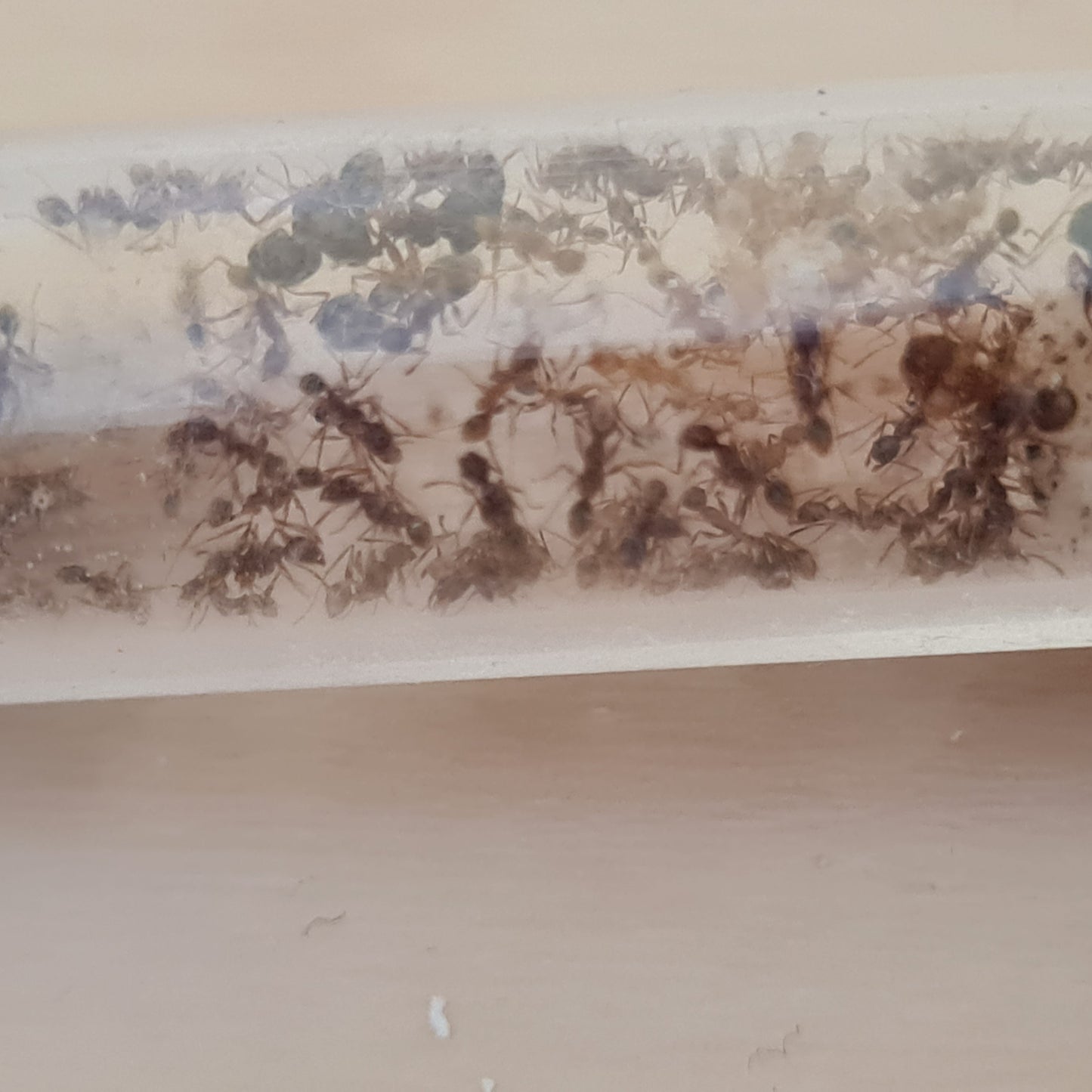
Description
Name: Pheidole nodus
Origin: Southeast Asia (Vietnam)
Queen: approx. 8 – 9 mm
Workers: Minor: approx. 2.5 – 3 mm | Major/Soldiers: approx. 4.5 – 5 mm
Food: Carbohydrates (honey, sugar water), proteins (small insects such as fruit flies, crickets, roaches)
Humidity:
• Arena: 50 – 70 %
• Nest: 60 – 80 %
Temperature:
• Arena: 24 – 28 °C
• Nest: 24 – 28 °C
Winter Dormancy: No
Nest Type: Ytong, plaster, 3D, or sand-clay nests
Colony Size: 5,000 – 20,000 workers
Advantages and Disadvantages of Pheidole nodus
Advantages:
Attractive, two-caste species with a clear size difference between minors and majors. Tropical origin, so active year-round. Very exciting and aggressive hunting behavior.
Disadvantages:
Very small and quick – high escape risk without perfect escape-proofing. Tropical conditions require consistently high humidity and warmth.
Care
During the founding phase, a test tube nest with a mini arena (approx. 10×10 cm) is sufficient. Later, a well-ventilated nest with a moist area should be used (e.g. Ytong or sand-clay). The arena must be escape-proof, as the workers are extremely small.
Feeding
Very high protein requirement – offer small insects such as fruit flies, crickets, or roaches several times a week. Carbohydrates (honey or sugar water) should be available at all times and changed regularly.