
Pogonomyrmex rugosus
Pogonomyrmex rugosus
SKU:
Out of stock
Couldn't load pickup availability
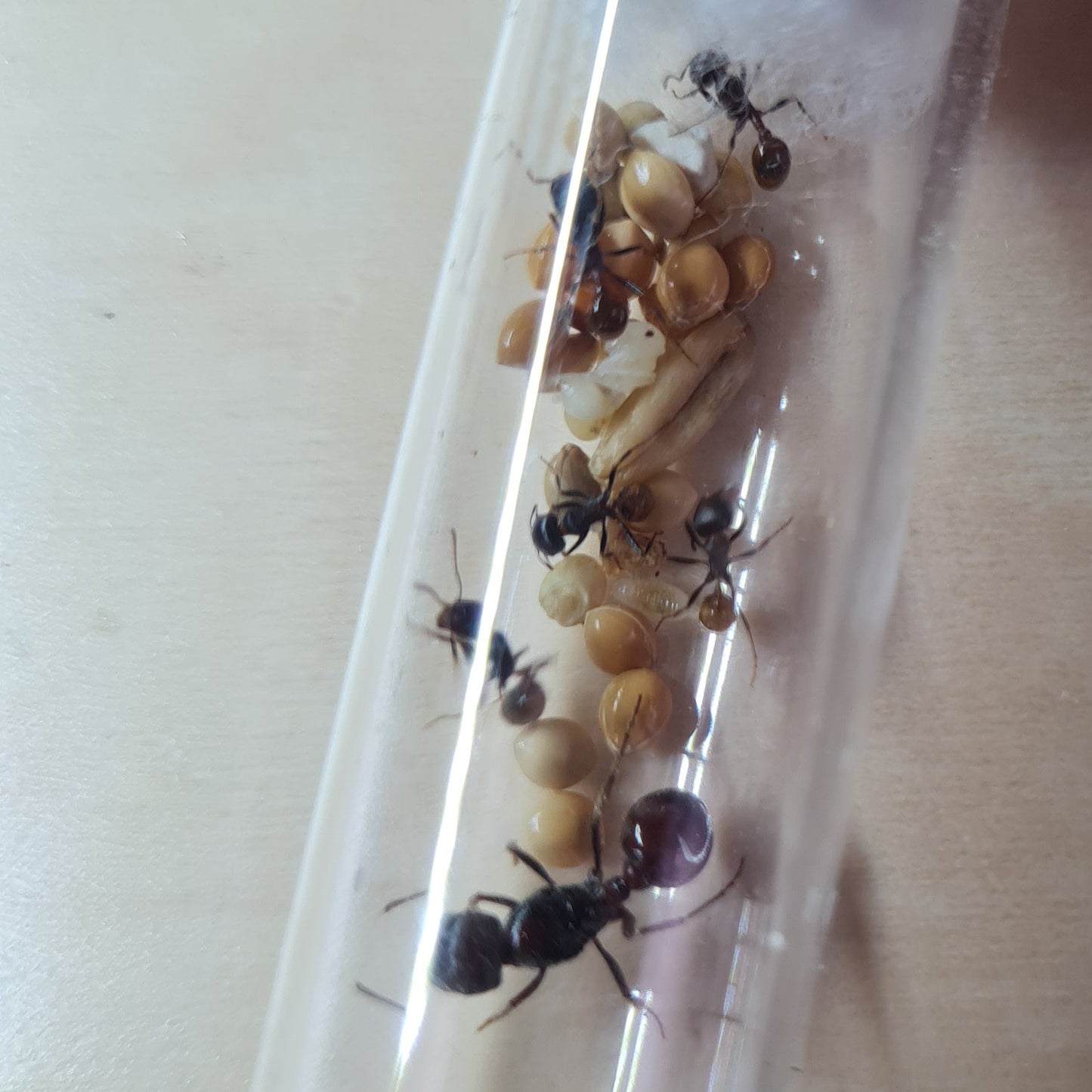
Description
Name: Pogonomyrmex rugosus
Origin: Southwestern USA (Arizona)
Queen: approx. 12 – 14 mm
Workers: approx. 5 – 9 mm (polymorphic, including majors)
Food: Mainly seeds & grains (harvester ant), plus insects as a protein source
Humidity:
- Arena: 20 – 40 % (dry)
- Nest: 40 – 60 %
Temperature:
- Arena: 25 – 35 °C
- Nest: 24 – 30 °C
Winter Dormancy: No, but it is advisable to lower temperatures to 16-18°C for 2-3 months
Nest Type: Sand-clay nests, Ytong, or large earth nests with an outdoor area
Colony Size: Several thousand workers
Advantages and Disadvantages of Pogonomyrmex rugosus
Advantages:
- Very impressive harvester ant with active foraging behavior
- Robust desert species, perfectly adapted to dry conditions
- Large majors and soldiers with powerful mandible use – very exciting to observe
Disadvantages:
- Very painful sting – not suitable for beginners!
- Needs a lot of space and a dry-warm climate
- Relatively slow brood cycle compared to tropical species
Care
During the founding phase, a test tube nest with a sand-clay substrate is sufficient. Later they need a larger sand-clay or Ytong nest and an arena of at least 30×30 cm. Since they are very active and prone to digging, a deep arena with substrate should be provided.
Feeding
Pogonomyrmex rugosus is a classic harvester ant:
- Seeds & grains form the main food and are processed into "ant bread".
- Proteins in the form of insects (e.g. crickets, roaches, flies) should be added several times a week.
Special Features
This species is very fascinating due to its powerful build, active foraging trips, and impressive majors. However, caution is advised: its sting is among the most painful in the animal kingdom ("Schmidt Sting Pain Index").