

Tetramorium sp. Germany
Tetramorium sp. Germany
SKU:
Note: Queen is from the 2025 nuptial flight
Out of stock
Couldn't load pickup availability

Description
Name: Tetramorium sp. (Germany)
Origin: Central Europe, especially Germany
Queen: approx. 7 – 9 mm
Workers: approx. 2.5 – 4 mm
Food: Carbohydrates (e.g. sugar water, honey), proteins (small insects such as flies, crickets, cockroaches)
Humidity:
Arena: 30 – 50 %
Nest: 50 – 70 %
Temperature:
Arena: 20 – 26 °C
Nest: 22 – 28 °C
Winter Dormancy: Yes, native-style winter dormancy
Nest Type: Aerated concrete (Ytong), plaster, or earth nests are perfectly suited
Colony Size: up to 10,000 workers
Advantages and Disadvantages of Tetramorium sp.
Advantages:
Tetramorium sp. is extremely active, agile, and adaptable. It develops quickly, reliably accepts food, and is very easy to care for – an excellent species for beginners. Due to its native origin, it is well adapted to Central European conditions.
Disadvantages:
Due to the small size of the workers, they can escape through very fine openings. Their high activity level may seem a bit hectic to some keepers.
Care
Tetramorium sp. is one of the most uncomplicated ant species for beginners.
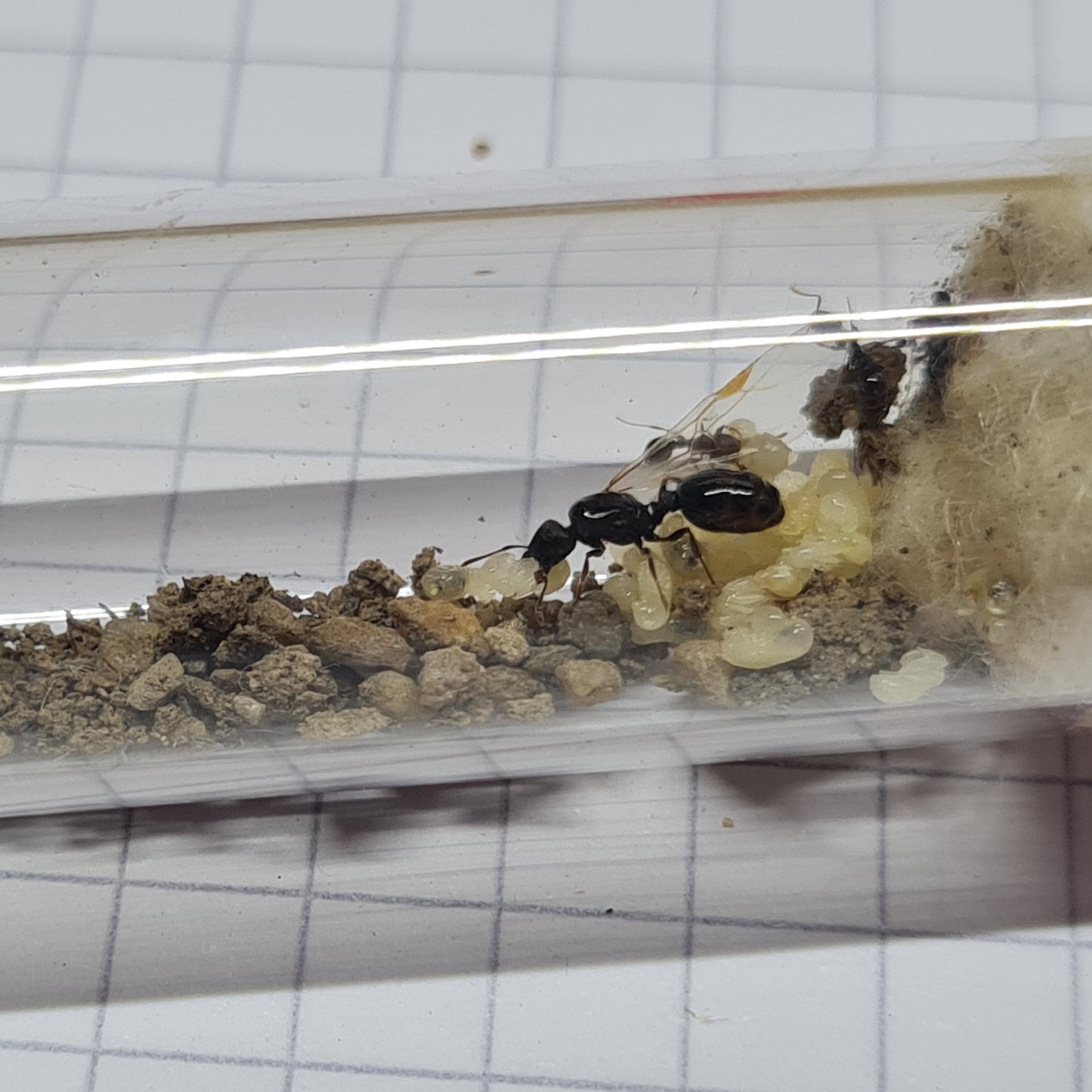
During the founding phase, a test tube nest with a mini arena (approx. 10×10 cm) is sufficient. Later, a well-ventilated nest made of plaster, aerated concrete, or earth is recommended. The arena should be at least 20×20 cm and designed to be escape-proof. This species is diurnal, particularly agile, and constantly foraging.
Feeding
Very voracious and active – food is accepted quickly.
Give proteins such as dead insects (flies, cockroaches, crickets) every 2–3 days.
Winter Dormancy
Tetramorium sp. requires a native-style winter dormancy.
From November to February, the colony should be kept at approx. 5 – 8 °C.