
Trichomyrmex mayri
Trichomyrmex mayri
SKU:
Out of stock
Couldn't load pickup availability
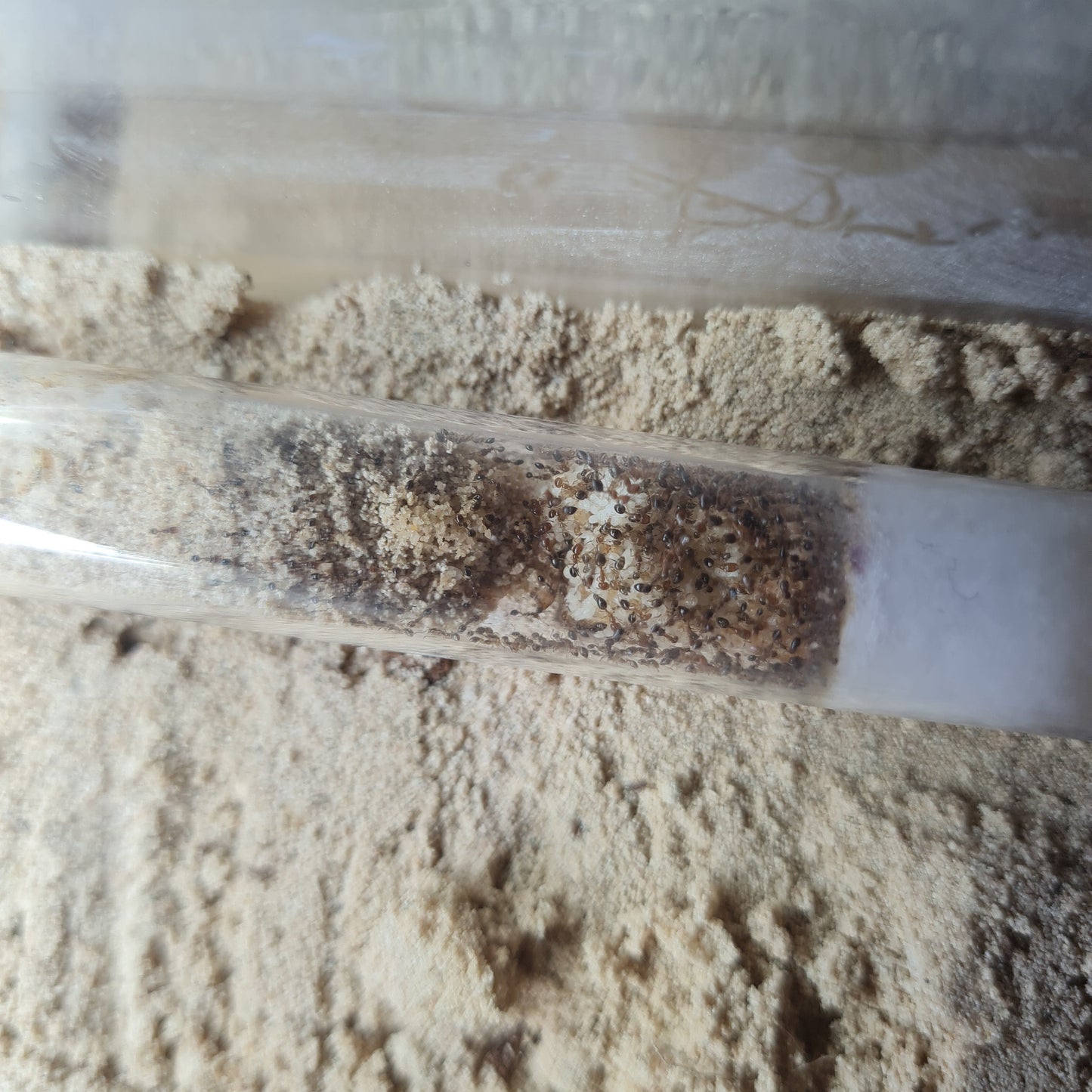
Description
Name: Trichomyrmex mayri
Origin: South/Southeast Asia, now spread worldwide in warm regions (tramp species)
Queen: approx. 6 mm
Workers: approx. 2 mm
Food: Carbohydrates (honey, sugar water), proteins (small insects)
Humidity:
Arena: 60 – 70%
Nest: 70 – 80%
Temperature:
Arena: 25 – 28 degrees
Nest: 25 – 30 degrees
Winter Dormancy: No, no winter dormancy needed
Nest Type: Aerated concrete (Ytong), plaster, or 3D-printed nests with good moisture supply
Colony Size: Very large, polygynous
Advantages and Disadvantages of Trichomyrmex mayri:
Advantages:
Active year-round, very fast growth, and a constant climate is sufficient – no winter dormancy needed.
Disadvantages:
Forms very large, polygynous colonies with high protein demand. Considered an escape artist and, due to its rapid reproduction, more suitable for experienced keepers rather than beginners.
Care:
Test tube nest at first, later a nest with good moisture supply. Pay attention to reliable escape protection.
Feeding:
Offer honey or sugar water as well as feeder insects regularly and generously, as protein demand is high.