


Aphaenogaster longiceps
Aphaenogaster longiceps
SKU:
4 in stock
Couldn't load pickup availability


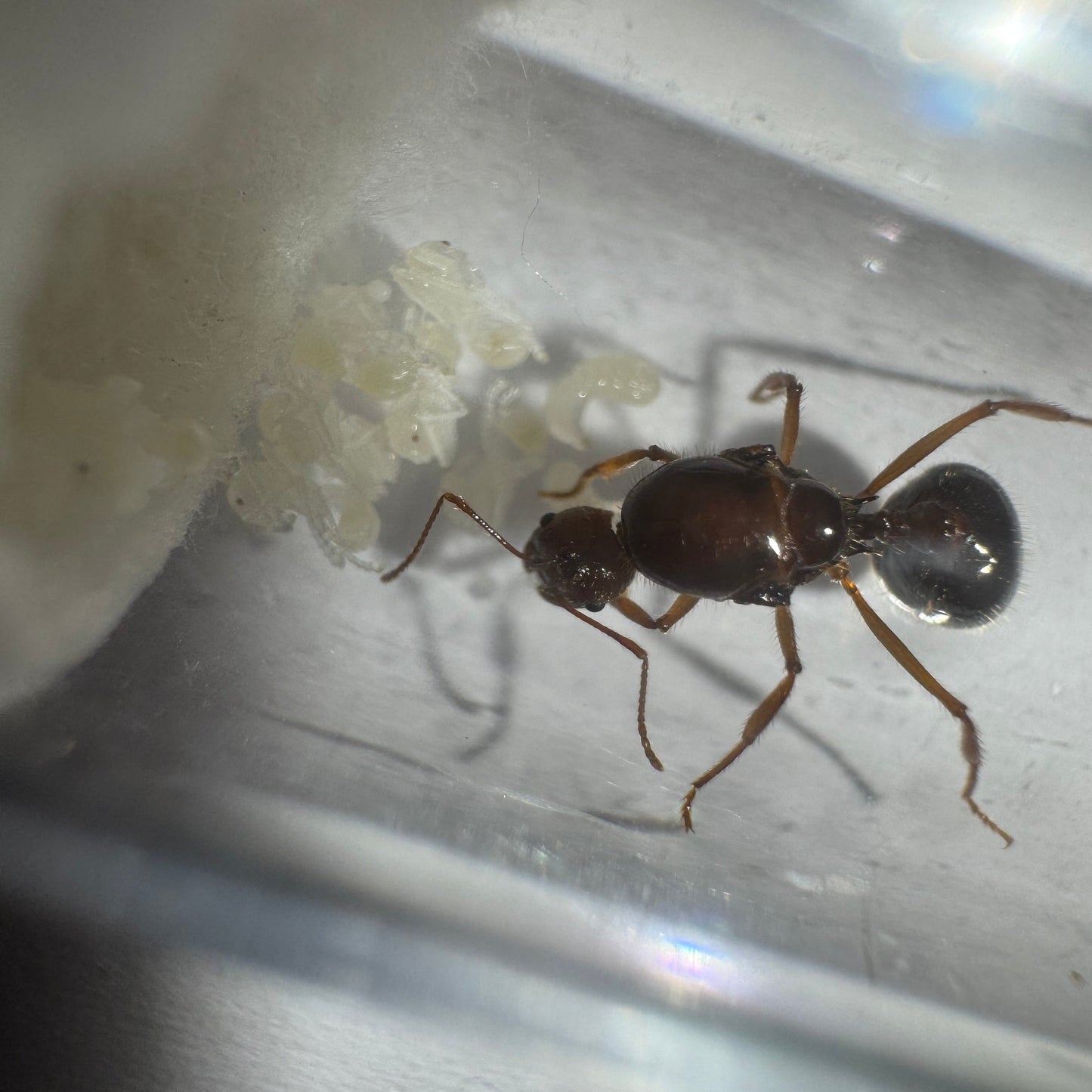
Description
Name: Aphaenogaster longiceps
Origin: Southern Europe (e.g. Spain, Italy, Balkan region)
Queen: approx. 8 – 9 mm
Workers: approx. 4 – 6 mm
Food: Carbohydrates (e.g. honey, agave syrup, sugar water), proteins (insects such as cockroaches, flies, black soldier fly larvae)
Humidity:
• Arena: 40 – 60%
• Nest: 60 – 80%
Temperature:
• Arena: 22 – 26 °C
• Nest: 22 – 26 °C
Winter Dormancy: Yes, late November to February at approx. 10 – 15 °C
Nest Type: Ytong, plaster, or 3D-printed nests with humidification are very well suited
Colony Size: approx. 1,000 – 2,000 workers
Advantages and Disadvantages of Aphaenogaster longiceps
Advantages:
Aphaenogaster longiceps is a calm, low-maintenance species. It is well suited for smaller setups and can easily be kept as a “desktop colony.” Its natural foraging behaviour and the formation of ant trails are lovely to observe.
Disadvantages:
The colony grows at a rather moderate pace and is less frantic than many tropical species. Those expecting very high activity may find it somewhat calm.
Care
Aphaenogaster longiceps is easy to keep and well suited for beginners.
During the founding phase, a test tube with a small arena (10×10 cm to 20×20 cm) is sufficient. Once the test tube is well populated, a humidifiable nest can be offered.
For a mature colony, a 20×20 cm arena with a moist nest is usually enough. Thanks to its low space requirements, this species is excellently suited for smaller rooms or the desktop.
Feeding
There are no difficulties with feeding.
Offer proteins such as cockroaches, flies, or black soldier fly larvae every 3 – 4 days (freeze or scald beforehand to prevent mites)
Winter Dormancy
Aphaenogaster longiceps requires a winter dormancy period from late November to February at approx. 10 – 15 °C.
Skipping the winter dormancy can slow brood development and shorten the queen's lifespan. Food requirements are low during this period. Carbohydrates should still be offered continuously. Proteins are not strictly necessary but can be given in small amounts every two weeks.
Pay particular attention to constant nest humidity during winter dormancy.