


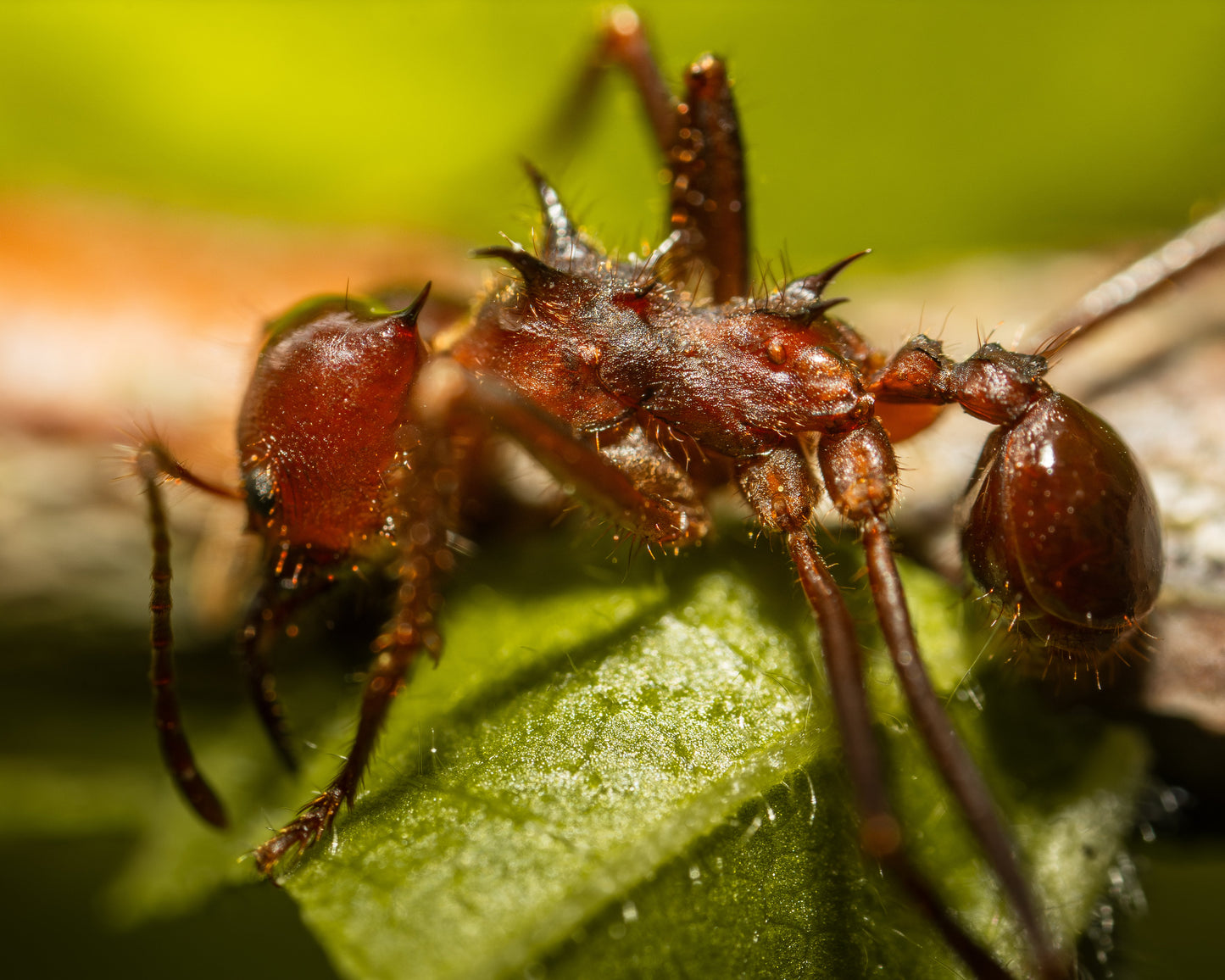
Atta mexicana
Atta mexicana
SKU:
Out of stock
Note: Please research the care requirements thoroughly before purchasing.
Couldn't load pickup availability


Description
Name: Atta mexicana
Origin: Mexico and Central America
Queen: approx. 28 – 32 mm
Workers: Minor: 2 – 4 mm | Media: 5 – 12 mm | Major/soldiers: 14 – 18 mm
Food: Fresh, untreated leaves (e.g. blackberry, raspberry, oak, rose leaves), rolled oats and flower petals – for fungus cultivation. No animal protein required.
Humidity:
• Fungus garden: 90 – 95%
• Arena: 50 – 70%
Temperature:
• Fungus chamber: 24 – 26 °C
• Arena: 22 – 26 °C
Winter Dormancy: None, tropical/subtropical species
Nest Type: Multi-chamber nests for fungus cultivation, e.g. acrylic or glass containers with humidity control
Colony Size: Several million workers in the wild
Advantages and Disadvantages of Atta mexicana
Advantages:
One of the largest and most impressive leafcutter ant species. Very active colony and foraging behaviour. Fascinating due to its symbiotic fungus farming and complex division of labour.
Disadvantages:
Very high space requirements and demanding care. They need a constant supply of fresh, untreated leaf material. Without perfect climate control, the fungus dies – and with it the colony. Strong destructive power if they escape.
Care
During the founding phase, the queen should be kept with a small portion of fungus in a moist, well-ventilated container. From the first worker offspring onward, the fungus nest is gradually enlarged. Later, several chambers are needed for fungus, waste, and a feeding arena.
Feeding
Mainly fresh leaves (unsprayed), e.g. blackberry, raspberry, oak, cherry, or rose leaves. Flower petals and rolled oats can also be given. The food serves solely to nourish the fungus, not to directly feed the ants.