
Camponotus brevis
Camponotus brevis
SKU:
Out of stock
Couldn't load pickup availability
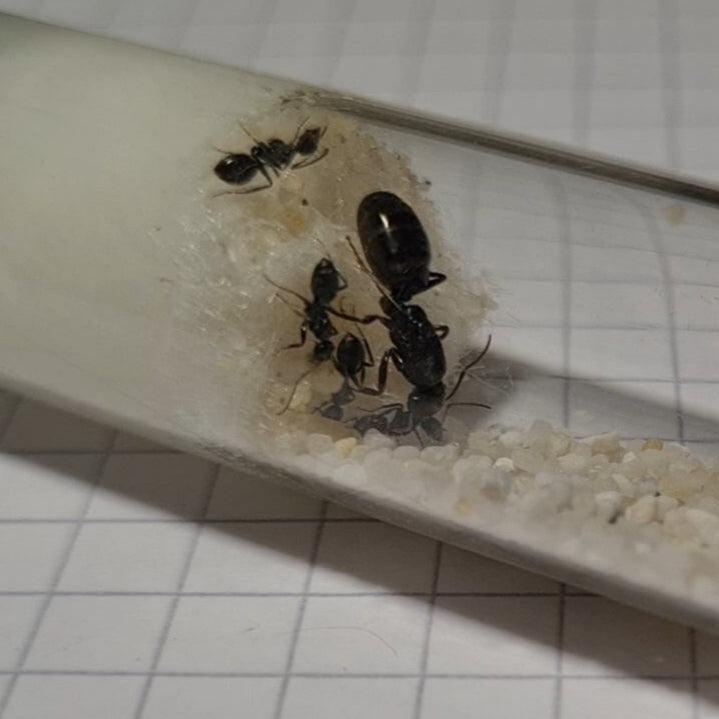
Description
Name: Camponotus brevis
Origin: Southeast Asia (e.g. Thailand, Malaysia)
Queen: approx. 14 – 16 mm
Workers: approx. 6 – 10 mm
Food: Carbohydrates (e.g. honey, sugar water, maple syrup), proteins (feeder insects, e.g. cockroaches, crickets, flies)
Humidity:
Arena: 50 – 70%
Nest: 60 – 80%
Temperature:
Arena: 24 – 28 degrees
Nest: 24 – 28 degrees
Winter Dormancy: No, no winter dormancy required!
Nest Type: We recommend tropical-suitable nests such as humidified 3D-printed nests, acrylic with moisture chambers, or Ytong
Colony Size: approx. 1,000 – 3,000 workers
Advantages and Disadvantages of Camponotus brevis:
Advantages:
Camponotus brevis is ideal for observation thanks to its calm behaviour. The ants are diurnal and display fascinating feeding behaviour.
Disadvantages:
This species requires constantly high temperatures and humidity, making it somewhat more demanding to keep. Without consistent conditions, brood growth quickly stagnates.
Care:
Camponotus brevis is a tropical species that requires constant warmth and humidity.
At the start, a test tube nest with a small arena (10×10 cm) is sufficient. Later, you can move to a larger arena (20×20 cm or more) with a moist nest. A tropical-suitable setup with a heat mat or heat cable is recommended.
The species is rather calm, retreats when disturbed, and is therefore pleasant to keep.
Feeding:
Feeding is uncomplicated.
Offer proteins every 2 – 3 days in the form of cockroaches, flies, crickets, or larvae (kill beforehand by freezing or scalding to prevent mites).
Carbohydrate sources such as honey or sugar water should be offered continuously and renewed weekly to prevent poisoning from fermentation or mould.
Winter Dormancy:
Camponotus brevis requires no winter dormancy!