

Camponotus fedtschenkoi
Camponotus fedtschenkoi
SKU:
Out of stock
Couldn't load pickup availability

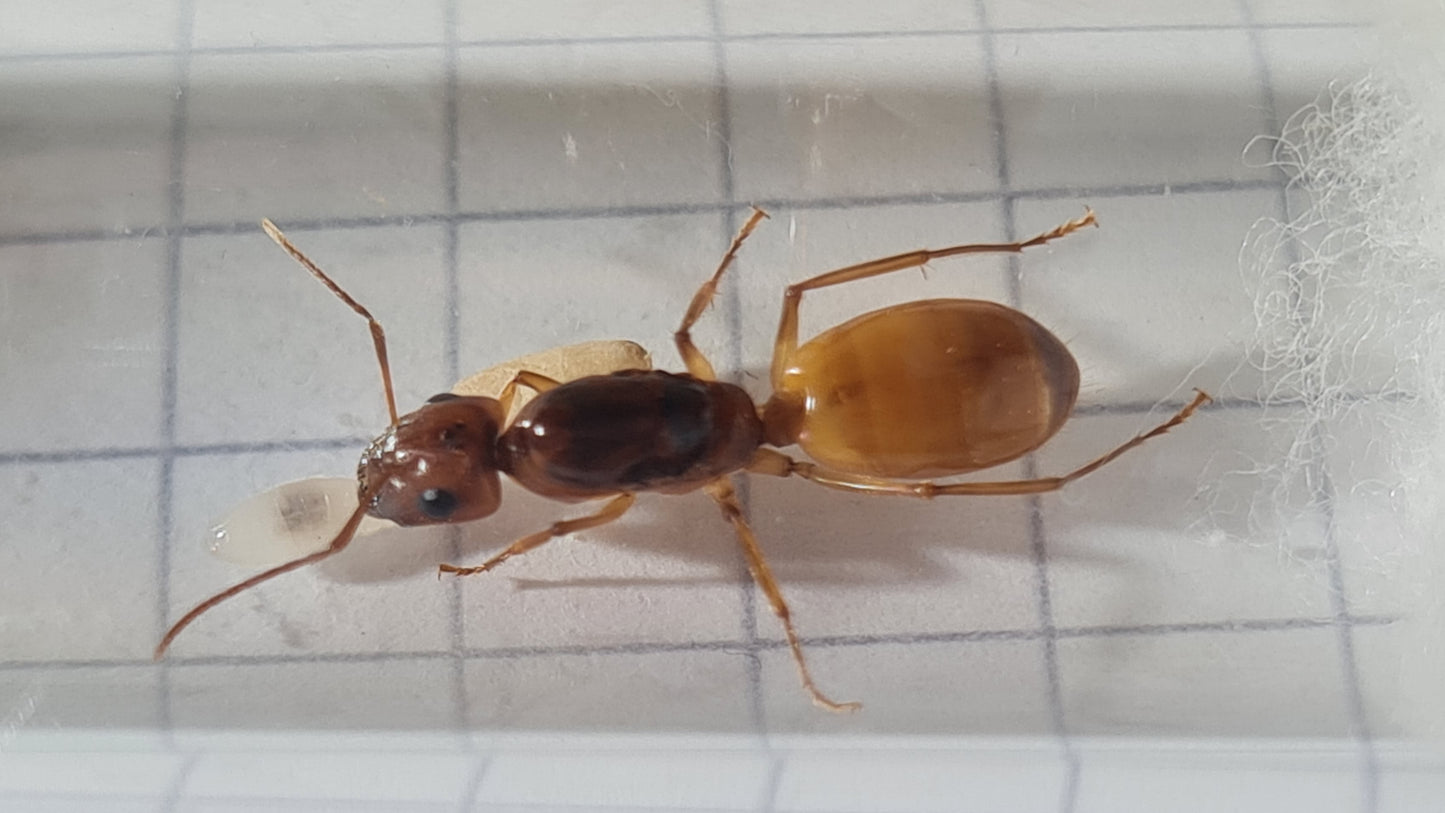
Description
Name: Camponotus fedtschenkoi
Origin: Central Asia (especially Kazakhstan, Uzbekistan, Turkmenistan)
Queen: approx. 13 – 15 mm
Workers: approx. 6 – 8 mm
Food: Carbohydrates (e.g. honey, sugar water, maple syrup), proteins (e.g. flies, cockroaches, crickets)
Humidity:
• Arena: 30 – 50 %
• Nest: 50 – 70 %
Temperature:
• Arena: 22 – 28 °C
• Nest: 24 – 28 °C
Winter Dormancy: Yes, 3 – 4 months at approx. 10 – 12 °C
Nest Type: Ytong, plaster, or sand-clay nests are particularly suitable
Colony Size: approx. 1,000 – 3,000 workers
Advantages and Disadvantages of Camponotus fedtschenkoi
Advantages:
Camponotus fedtschenkoi is a beautifully colored species with high-contrast tones (often reddish-yellow-black). It is robust, adaptable, and easy to manage thanks to its moderate colony size. Particularly well suited for beginners with a bit of patience.
Disadvantages:
Brood development can be slow, especially during the founding period. Consistent winter dormancy is necessary for healthy colony development.
Care
Camponotus fedtschenkoi is relatively easy to care for, but requires a proper winter dormancy period for successful colony development.
A test tube with a small arena (10×10 cm) is sufficient for founding. Later, a well-ventilated nest made of Ytong, plaster, or sand-clay is recommended, along with an arena of at least 20×20 cm.
This species is active during the day and at dusk. It shows calm behavior, which makes it especially attractive for observation.
Feeding
Camponotus fedtschenkoi is uncomplicated when it comes to feeding.
Protein-rich insects such as cockroaches, crickets, or flies should be offered every 3–4 days – ideally dead or scalded.
Carbohydrates such as honey or sugar water should be permanently available. Replace the sugar water at least weekly to avoid hygiene issues.
Winter Dormancy
Camponotus fedtschenkoi requires a winter dormancy period