

Camponotus parius
Camponotus parius
SKU:
Out of stock
Couldn't load pickup availability

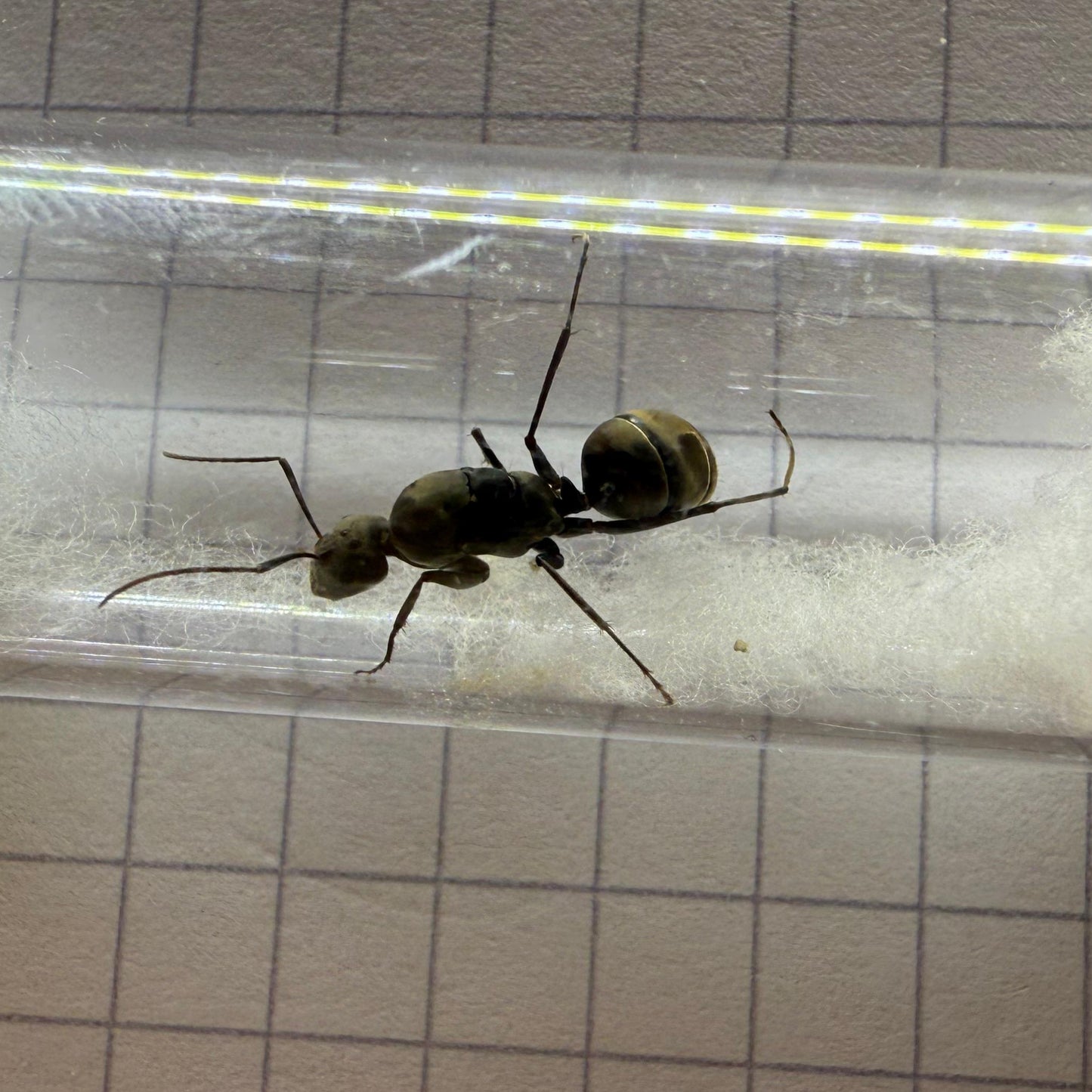
Description
Name: Camponotus parius
Origin: Southeast Asia
Queen: approx. 14 – 16 mm
Workers: approx. 6 – 9 mm
Food: Carbohydrates (e.g. honey, sugar water, maple syrup), proteins (feeder insects such as cockroaches, flies, crickets)
Humidity:
• Arena: 40 – 60 %
• Nest: 60 – 80 %
Temperature:
• Arena: 24 – 28 °C
• Nest: 24 – 28 °C
Winter Dormancy: No
Nest Type: Ytong, plaster, or 3D nests with good ventilation and a moist nest chamber are ideal
Colony Size: approx. 2,000 – 5,000 workers
Advantages and Disadvantages of Camponotus parius
Advantages:
Camponotus parius impresses with its robust appearance and lively movement style. It shows interesting social behavior, is curious and active, especially at dusk. The species is well suited to keepers with some prior experience and grows moderately fast under ideal conditions.
Disadvantages:
Camponotus parius is heat-loving and sensitive to temperature fluctuations. It can be somewhat reserved in the initial phase, and colony development requires patience and consistent conditions.
Care
Camponotus parius is considered moderately demanding to keep. During the founding phase, a test tube nest with a small arena (approx. 10×10 cm) is sufficient. As the colony grows, it should be moved to a larger, well-ventilated nest (e.g. Ytong or plaster) and an arena of at least 20×20 cm.
The species is predominantly active at dusk and can be observed particularly well during the evening hours – ideal for keepers who enjoy studying their ants in low light.
Feeding
Proteins in the form of insects such as cockroaches, flies, or crickets (frozen or scalded) should be offered every 3–4 days.
Carbohydrates such as honey or sugar water should be permanently available. Make sure to change the sugar water regularly (at least weekly) to avoid mold growth and contamination.
Winter Dormancy / Diapause
Camponotus parius does not undergo winter dormancy.