

Camponotus sexguttatus
Camponotus sexguttatus
SKU:
Out of stock
Couldn't load pickup availability

Description
Name: Camponotus sexguttatus
Origin: South and Central America
Queen: approx. 13 – 15 mm
Workers: approx. 6 – 9 mm
Food: Carbohydrates (e.g. honey, sugar water, maple syrup), proteins (feeder insects, e.g. cockroaches, flies, crickets)
Humidity:
Arena: 40 – 60%
Nest: 60 – 80%
Temperature:
Arena: 24 – 28 degrees
Nest: 24 – 28 degrees
Winter Dormancy: No, but a mild diapause (slowdown) is possible at 20 – 22 degrees
Nest Type: We recommend Ytong, plaster, or 3D nests with good ventilation and a moist nest chamber!
Colony Size: approx. 2,000 – 5,000 workers
Advantages and Disadvantages of Camponotus sexguttatus:
Advantages:
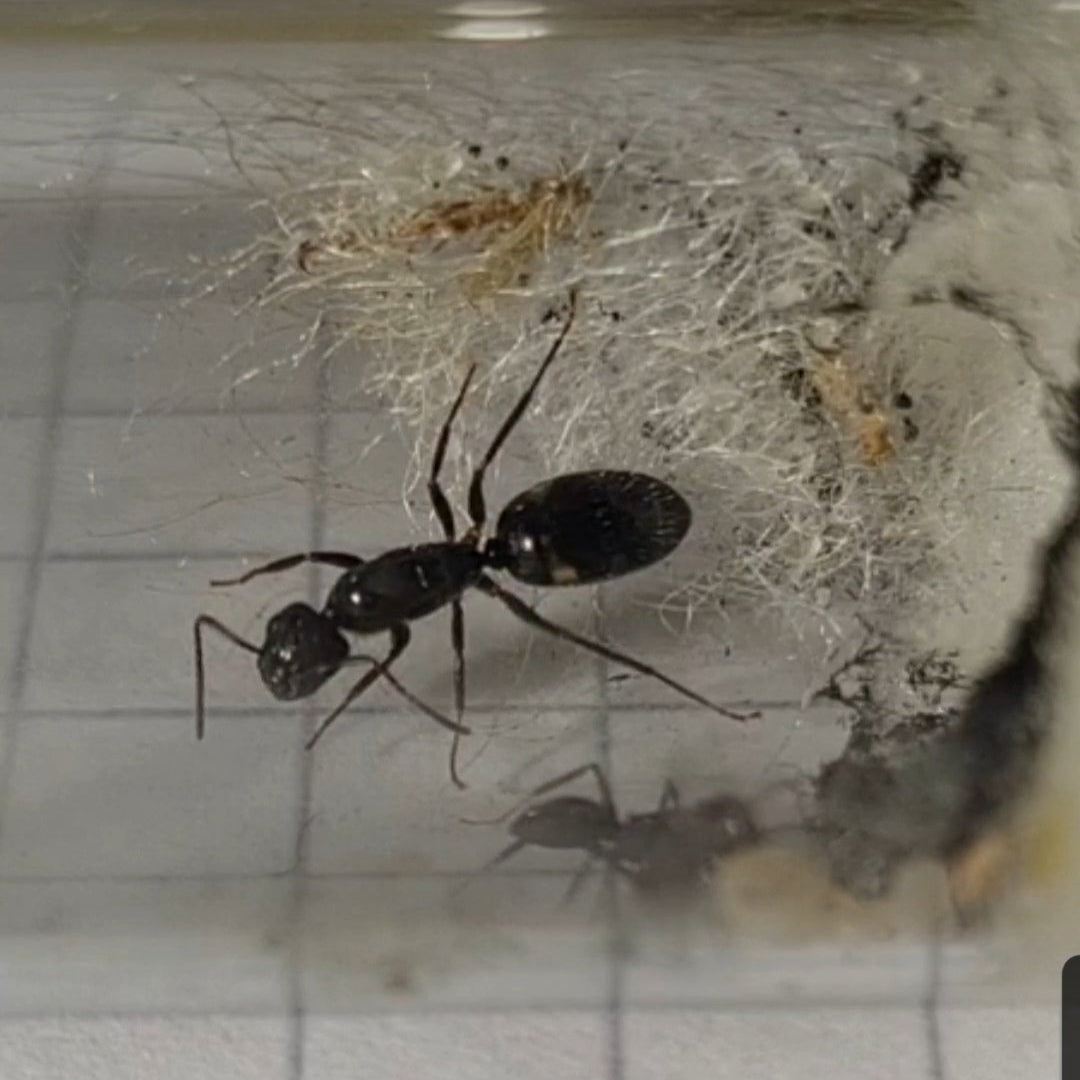
Camponotus sexguttatus is an extremely attractive species with striking markings (yellow spots on the gaster). It is relatively calm and easy to observe. The colony grows moderately and is therefore also suitable for slightly more advanced keepers.
Disadvantages:
Brood development is quite slow, especially during the founding phase. Patience is therefore required. They also need constant warmth.
Care:
Camponotus sexguttatus is a moderately demanding species to keep.
A test tube nest with a small arena (10×10 cm) is sufficient during the founding phase. Later, you can move to an arena of 20×20 cm and a nest that is kept moist.
This species is active at dusk and is usually most active during the evening hours. It is excellent for observation in low light.
Feeding:
Camponotus sexguttatus accepts food well.
Proteins in the form of insects such as cockroaches, flies, or crickets should be offered every 3 – 4 days (frozen or scalded).
Carbohydrates such as honey or sugar water should be permanently available. Change the sugar water weekly to avoid mold or contamination.
Winter Dormancy:
Camponotus sexguttatus does not require true winter dormancy.
Instead, it shows a diapause at lower temperatures (approx. 20 – 22 degrees), during which colony activity is reduced. Less food is needed during this time, though carbohydrate food should still be offered regularly. Proteins can be given at longer intervals. Even during diapause, nest humidity should still be monitored.