

Cataglyphis hispanica
Cataglyphis hispanica
SKU:
Out of stock
Couldn't load pickup availability

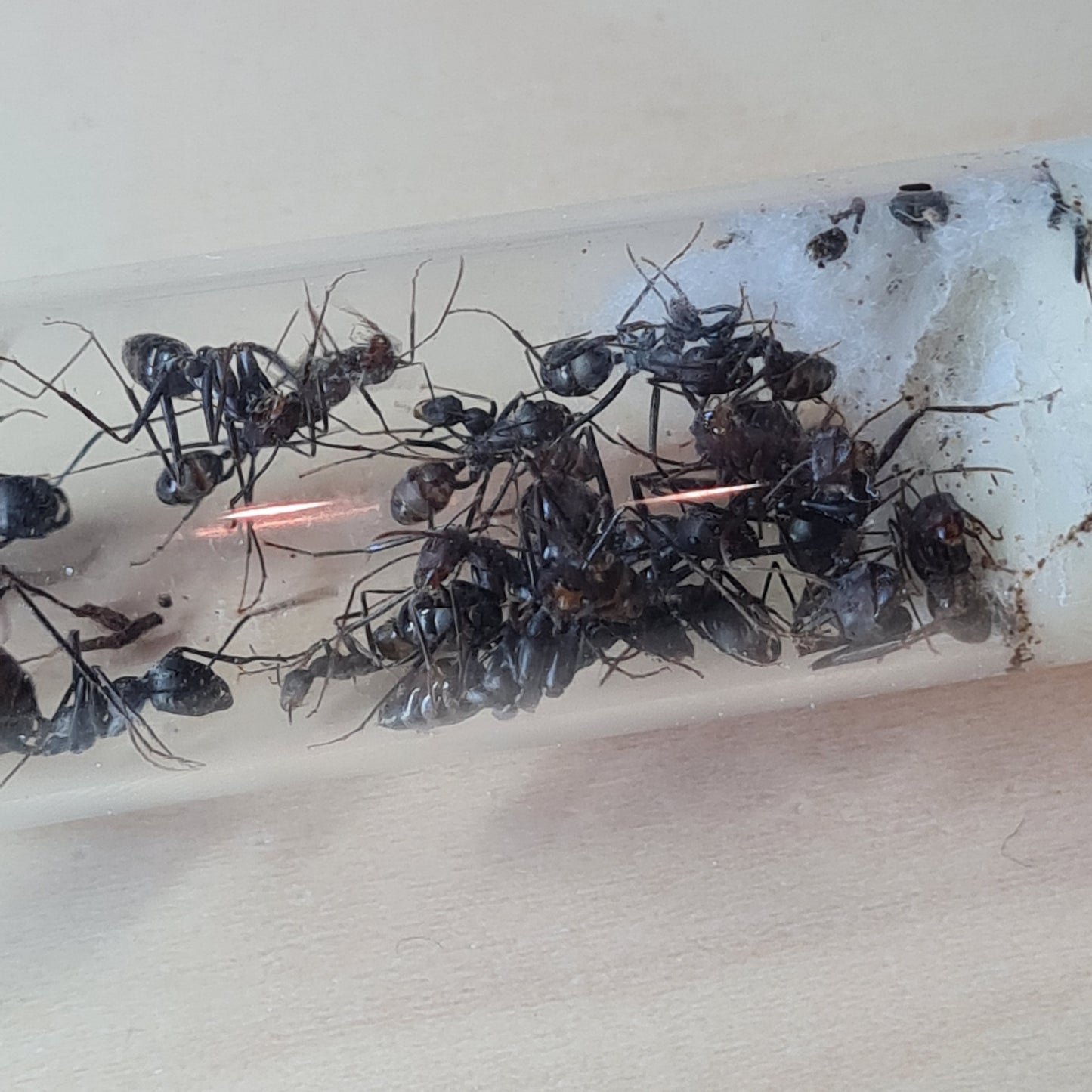
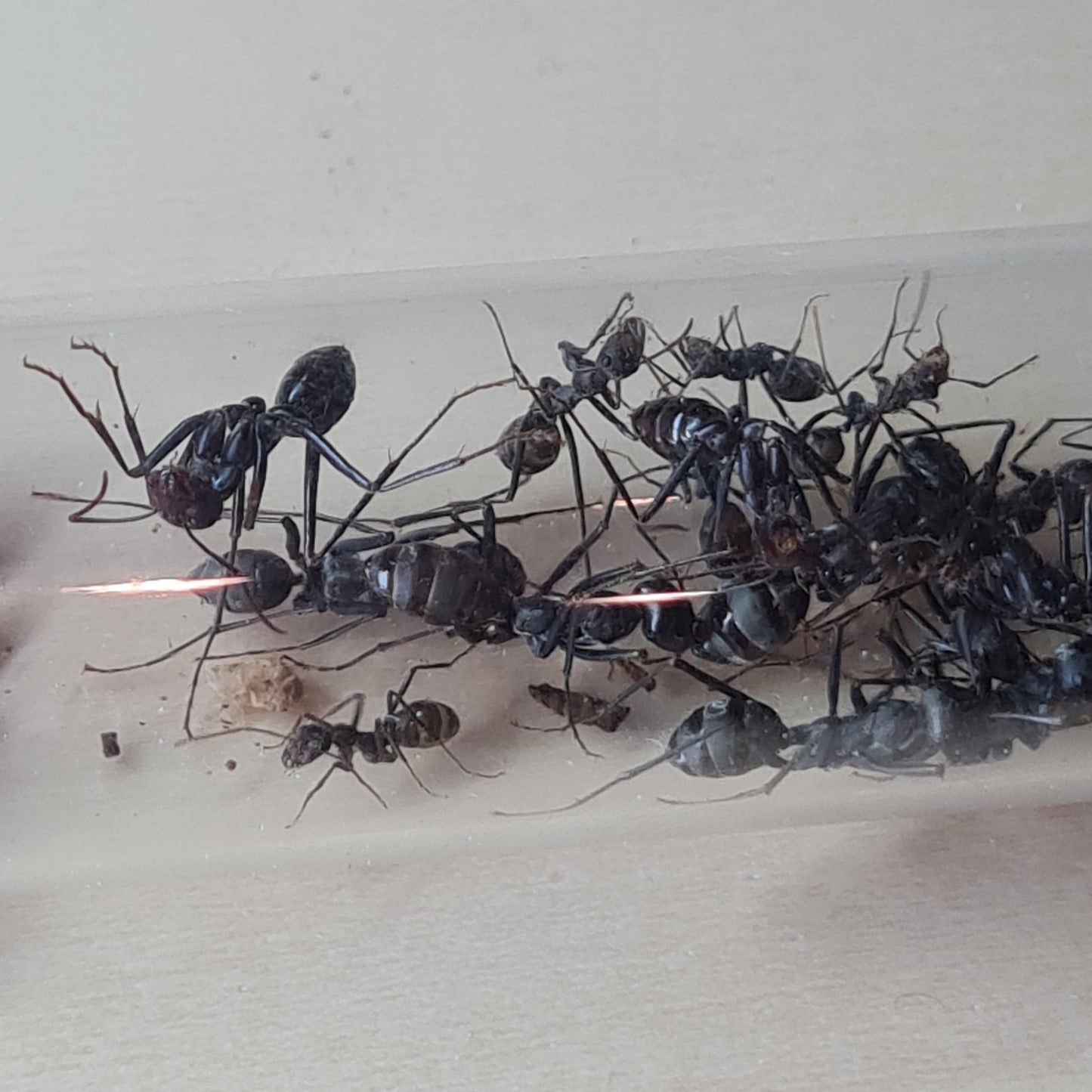
Description
Name: Cataglyphis hispanica
Origin: Southern Europe, especially Spain (e.g. Barcelona, Andalusia)
Queen: approx. 10 – 12 mm
Workers: approx. 6 – 10 mm
Food: Carbohydrates (e.g. honey, sugar water), proteins (insects such as flies, crickets, roaches)
Humidity:
• Arena: 20 – 40 %
• Nest: 30 – 50 %
Temperature:
• Arena: 26 – 35 °C
• Nest: 28 – 32 °C
Winter Dormancy: Yes, Southern European
Nest Type: Sand-clay nests, plaster or 3D nests with dry zones are very well suited
Colony Size: approx. 500 – 3,000 workers
Advantages and Disadvantages of Cataglyphis hispanica
Advantages:
Cataglyphis hispanica is a very fast, day-active species with fascinating orientation behavior. It is thermophilic, meaning heat-loving, and can remain active even at high temperatures. Its striking, quick behavior makes it especially exciting for keepers who want to observe movement and hunting behavior.
Disadvantages:
This species requires very warm, dry conditions – excessive humidity or low temperatures can be problematic. Under stress, the animals react hectically and tend to flee – suitable for beginners with a steady hand, but not for clumsy handling.
Care
Cataglyphis hispanica is specialized for heat and dryness.
During the founding phase, a test tube with dry cotton and a small arena is suitable.
Later, a well-ventilated sand-clay or 3D nest with multiple temperature zones is recommended.
The arena should be generously sized (from 20×20 cm) and absolutely escape-proof.
This species is especially day-active and hunts live insects very dynamically – ideal for keepers who want to observe during the day.
Feeding
Very active – also hunts live prey:
• Protein every 2–3 days such as small flies, roaches, crickets
• Offer carbohydrates like sugar water or honey permanently – ideally in small feeders that don't leak. In very warm climates, food intake can increase significantly.