


Formica sanguinea (Raptiformica)
Formica sanguinea (Raptiformica)
SKU:
2 in stock
Couldn't load pickup availability


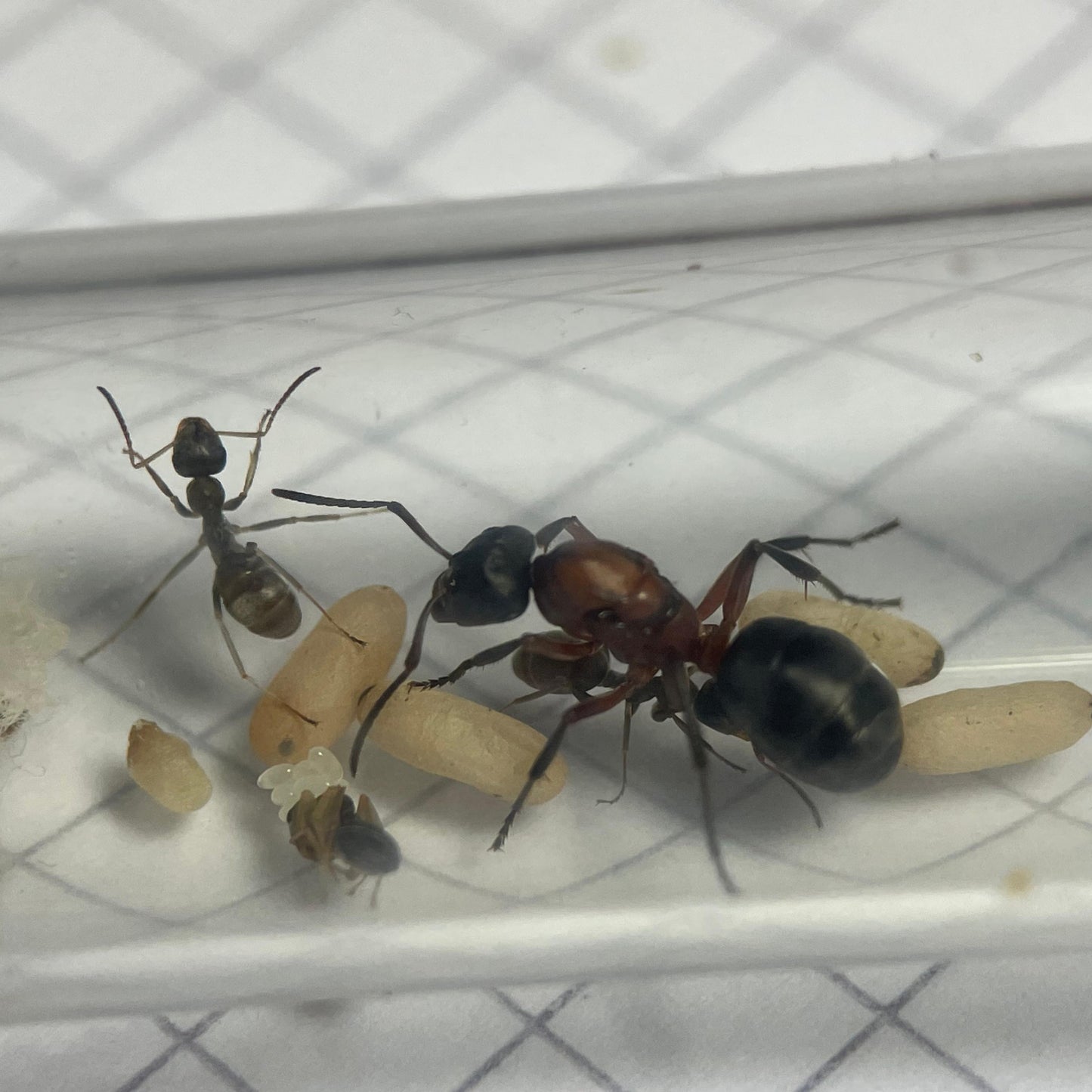
Description
Name: Formica sanguinea
Origin: Europe (also widespread in Germany)
Queen: approx. 9 – 11 mm
Workers: approx. 6 – 9 mm
Food: Carbohydrates (e.g. honey, sugar water), proteins (insects such as flies, crickets, cockroaches)
Humidity:
• Arena: 40 – 60 %
• Nest: 60 – 80 %
Temperature:
• Arena: 20 – 26 °C
• Nest: 22 – 28 °C
Winter Dormancy: Yes, approx. 3 – 4 months at 5 – 8 °C
Nest Type: Plaster, aerated concrete (Ytong), or earth nests with good ventilation
Colony Size: approx. 500 – 2,000 workers
Advantages and Disadvantages of Formica sanguinea
Advantages:
Formica sanguinea is especially fascinating for its raiding and slave-making behaviour. It can integrate foreign workers (usually Formica fusca) into its colony. It is robust, diurnal, adaptable, and native to Central Europe – making it well suited to local conditions. Its striking red-and-black colouring makes it visually very appealing.
Disadvantages:
This species is less suitable for beginners, as it shows complex behaviour and can become quite aggressive when disturbed. Caution is advised when handling it. In addition, a slave species (e.g. Formica fusca) is necessary, or at least helpful, for successful colony founding.
Care
Formica sanguinea needs a well-structured environment with escape-proofing. For founding, a test tube setup with an arena (min. 10×10 cm) works well. Later, a nest made of plaster or aerated concrete (Ytong) with a moist nest chamber should be used. The arena should be 20×20 cm or larger. They are diurnal and display exciting interactions among themselves and with their slave species.
Feeding
Formica sanguinea is an active hunter. Offer protein in the form of small insects (e.g. flies, crickets, cockroaches) every 2–3 days. Carbohydrates (honey, sugar water) should always be available. Pay attention to hygiene and change the sugar water regularly (at least once a week).
Winter Dormancy
Formica sanguinea requires a classic winter dormancy period.
From November to February/March the colony should be kept at approx. 5 – 8 °C.