
Lasius fuliginosus
Lasius fuliginosus
SKU:
5 in stock
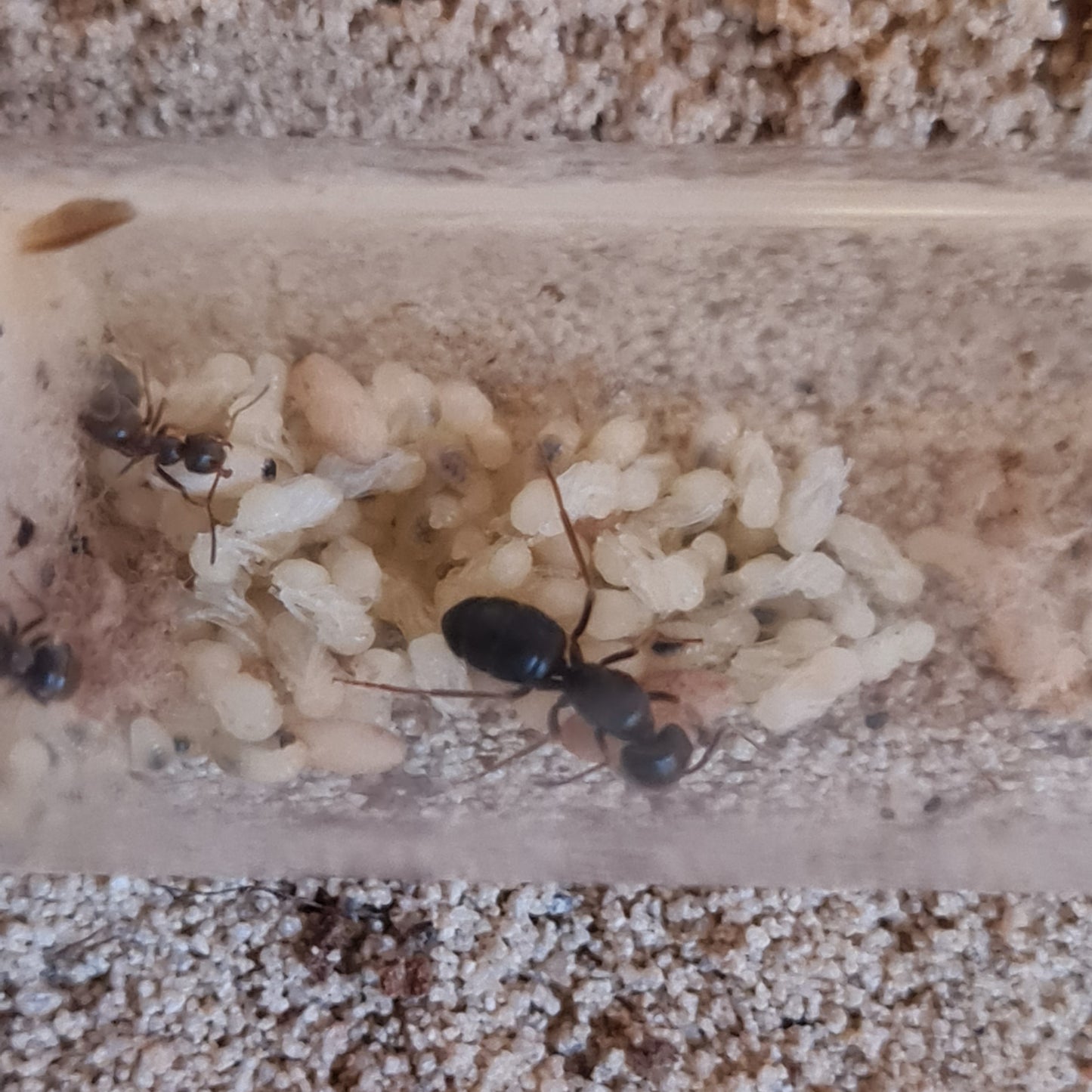
Note: When purchasing a Lasius fuliginosus queen with 5–10 workers, the workers do not come from Lasius fuliginosus, but are host workers of the species Lasius niger. These were used to successfully found the colony. All queens already have their own brood. To ensure rearing definitely succeeds, additional Lasius niger pupae can be added.
Couldn't load pickup availability
Description
Name: Lasius fuliginosus
Origin: Europe
Queen: approx. 7 – 9 mm
Workers: approx. 3 – 5 mm
Food: Carbohydrates (e.g. honey, sugar water, maple syrup), proteins (feeder insects, e.g. cockroaches, flies, crickets)
Humidity:
Arena: 40 – 60%
Nest: 60 – 80%
Temperature:
Arena: 20 – 26 degrees
Nest: 22 – 26 degrees
Winter Dormancy: Yes, late October to early March at approx. 5 – 10 degrees!
Nest Type: We recommend wood nests, cork, or special 3D-printed nests with ventilation!
Colony Size: up to 2 million workers
Advantages and Disadvantages of Lasius fuliginosus:
Advantages:
Lasius fuliginosus is a very exciting and active species, notable for its dark colouring and the formation of clearly structured ant trails. They display interesting social behaviour and are highly organised in their colony structure.
Disadvantages:
Founding occurs via social parasitism, meaning the queen requires a host colony (e.g. Lasius umbratus) for successful establishment.
Care:
Lasius fuliginosus builds complex carton nests with a wasp-nest-like structure. The workers cultivate a specific fungus on a substrate of sugary wood material. This fungus acts as a structural element that significantly reinforces the nest architecture, without serving as a food source – unlike myrmecophagous species such as Attini. Colony founding occurs through temporary social parasitism, whereby Lasius fuliginosus queens deliberately infiltrate queenless Lasius umbratus colonies and take over nest dominance.
Feeding:
Lasius fuliginosus accepts food readily. Offer protein every 3 – 4 days (e.g. cockroaches, flies, crickets).
Winter Dormancy:
Lasius fuliginosus requires a native-climate winter dormancy from late October to early March at approx. 5 – 10 degrees.
Caution:
Without winter dormancy, brood development may be impaired, and the queen's lifespan may be shortened. Nest humidity should be checked regularly.