


Monomorium latastei
Monomorium latastei
SKU:
Out of stock
Couldn't load pickup availability


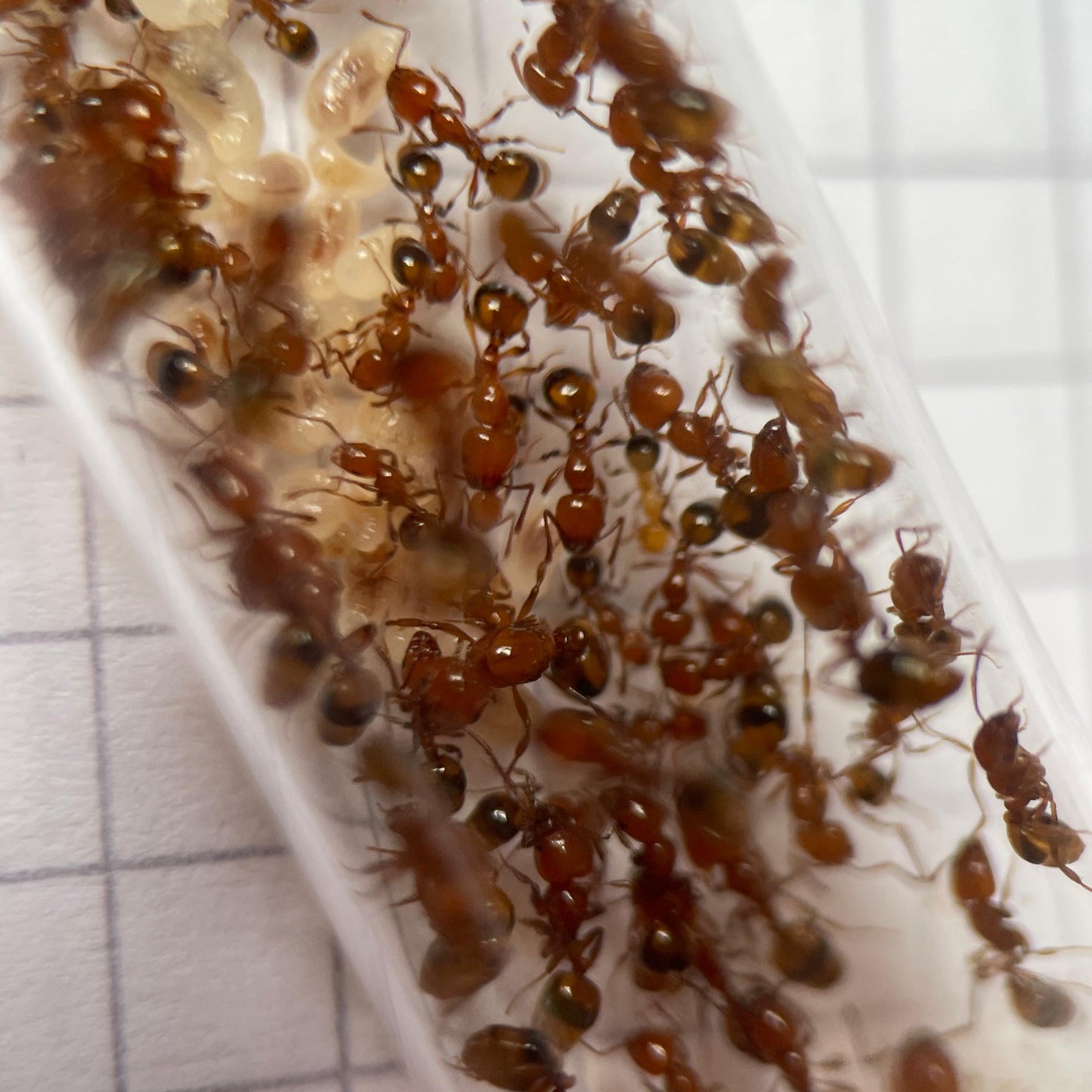
Description
Name: Monomorium latastei
Origin: Southern Chile
Queen: approx. 6 – 8 mm
Workers: approx. 3 – 6 mm (polymorphic, with majors/soldiers)
Food: carbohydrates (e.g. honey, sugar water), protein (insects such as flies, crickets, roaches)
Humidity:
• Arena: 40 – 60 %
• Nest: 50 – 70 %
Temperature:
• Arena: 22 – 26 °C
• Nest: 24 – 28 °C
Winter Dormancy: No, but a diapause at 18 – 20 °C is possible
Nest Type: Plaster, aerated concrete (Ytong), or modular 3D-printed nests with separate humidity zones are suitable
Colony Size: Medium-sized colonies, several hundred to a few thousand workers
Special features: Polygynous (multiple queens), sting present, non-invasive Monomorium species
Advantages and disadvantages of Monomorium latastei
Advantages:
This rare Monomorium species from Chile differs significantly from its relatives: it is not invasive, grows slowly, and remains well controllable. Its polymorphism with true majors (soldiers) makes it especially fascinating. Workers are very aggressive but possess a sting that is harmless to humans. Observations suggest possible parthenogenesis in larger workers – though this has not yet been scientifically confirmed.
Disadvantages:
Development from egg to adult takes a comparatively long time, around 3 months. The species is very aggressive when disturbed and requires escape-proof formicaria. Due to its rarity and unique traits, it is better suited to experienced keepers.
Care
Monomorium latastei is manageable under stable conditions but not suitable for beginners.
A test tube nest with a small arena can be used during the founding phase. As the colony grows, a well-ventilated nest with adjustable humidity and modular expansion options is recommended. Secure sealing is important due to the species' defensiveness.
Feeding
Very protein-loving!
Insects (e.g. flies, roaches, crickets) should be offered every 2–3 days.