

Pheidole parva
Pheidole parva
SKU:
Out of stock
Couldn't load pickup availability

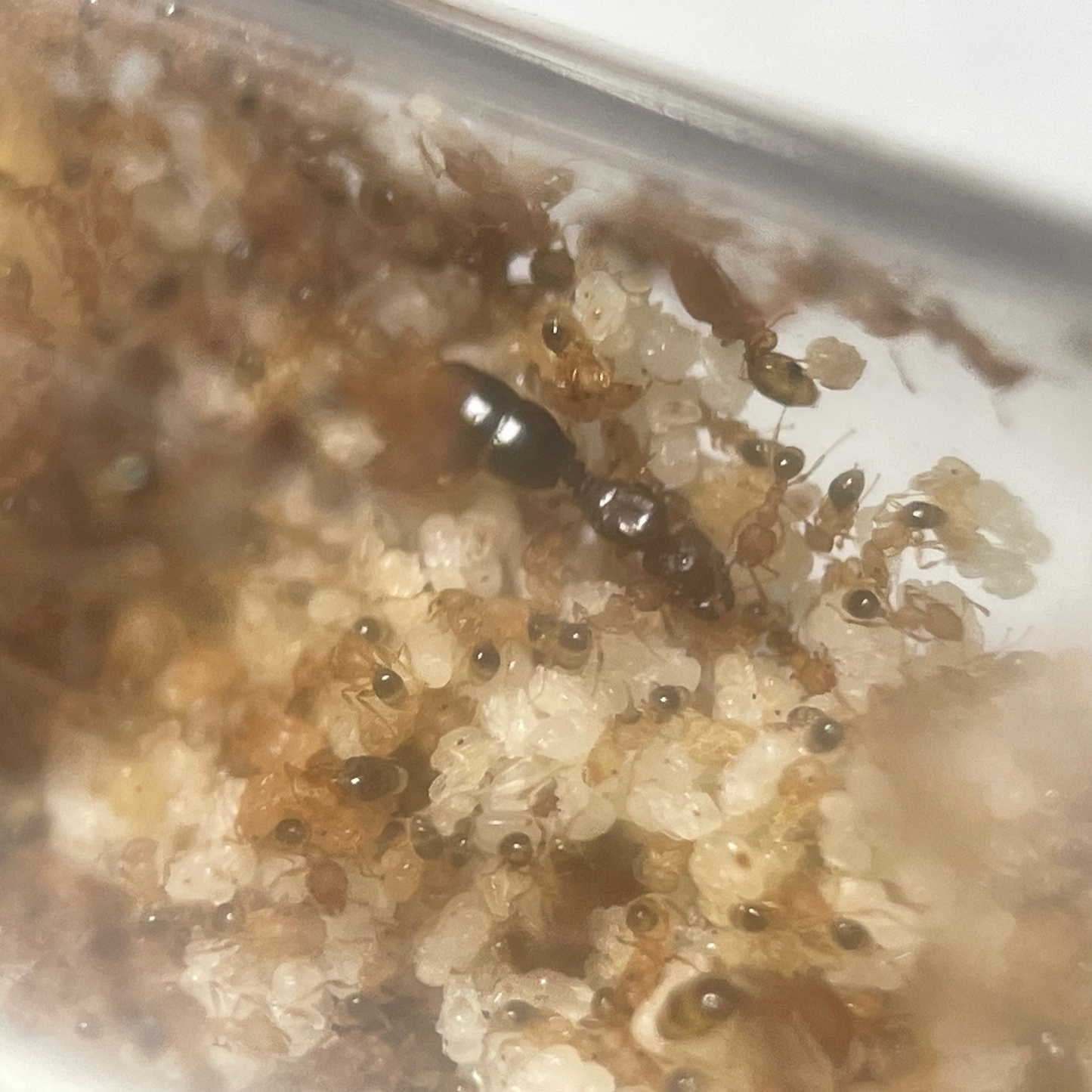
Description
Name: Pheidole parva
Origin: Vietnam
Queen: approx. 5 – 6 mm
Workers: Minor: approx. 1.5 – 2 mm / Major: approx. 2.5 – 3 mm
Food: Carbohydrates (e.g. honey, sugar water, agave syrup), proteins (e.g. roaches, flies, crickets, small insects)
Humidity: Arena: 50 – 70%
Nest: 60 – 80%
Temperature: Arena: 24 – 28 degrees
Nest: 24 – 28 degrees
Winter Dormancy: No, no winter dormancy needed!
Nest Type: We recommend moist 3D nests, acrylic with humidity chambers, or Ytong with a fine structure – ideal for small species!
Colony Size: Very large, up to several thousand workers
Advantages and Disadvantages of Pheidole parva:
Advantages:
Pheidole parva is a very active and industrious species. It forms great trails and, thanks to its soldiers (majors), has an exciting caste system.
Disadvantages:
Due to their small size, challenges can arise with escape-proofing and leftover food. The colony can grow very quickly – regular checks and good ventilation are necessary.
Care:
Pheidole parva is easy to keep but requires a well-secured setup, as it is very small.
A test tube with a small arena (10×10 cm) is sufficient to start. Later it should be expanded to a nest with a fine structure and an arena of at least 20×20 cm. Due to its small size it can use the tiniest gaps – so escape-proofing (e.g. talcum or PTFE) is especially important.
Feeding:
Offer proteins such as roaches, flies, or crickets every 2 – 3 days.
Carbohydrates such as honey or sugar water are readily accepted
Winter Dormancy:
Pheidole parva requires no winter dormancy, as it comes from tropical regions.
The colony is active year-round. Make sure the temperature stays constantly at least 24 degrees, so brood care and growth do not stagnate.
Even during quieter phases, carbohydrates should be offered continuously, while proteins can be reduced.