

Solenopsis fugax
Solenopsis fugax
SKU:
Out of stock
Couldn't load pickup availability

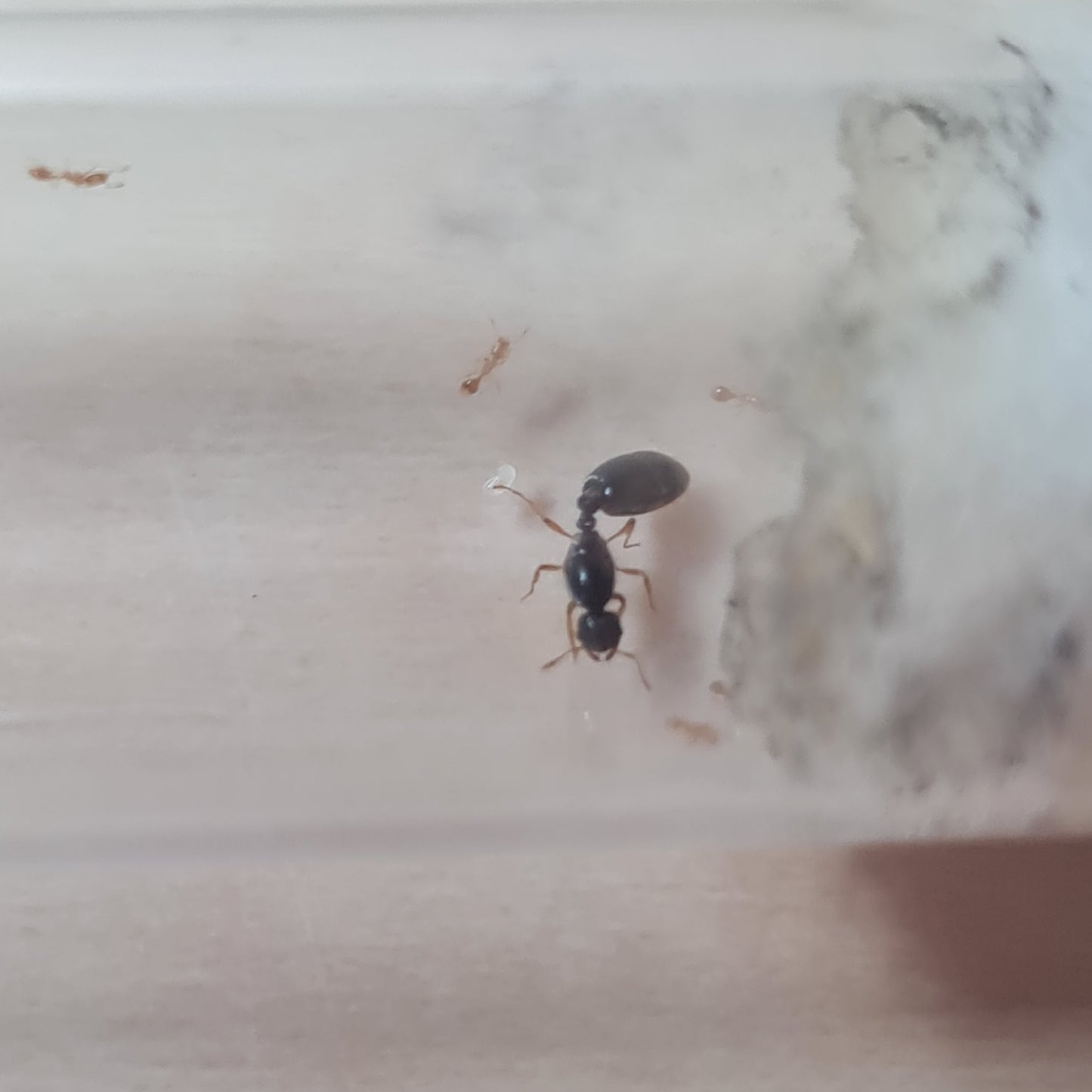
Description
Name: Solenopsis fugax
Origin: Europe
Queen: approx. 4.5 – 5.5 mm
Workers: approx. 1.5 – 2.5 mm
Food: Carbohydrates (sugar water, honey), proteins (small insects, protein sources)
Humidity:
• Arena: 30 – 50 %
• Nest: 50 – 70 %
Temperature:
• Arena: 20 – 26 °C
• Nest: 22 – 28 °C
Winter Dormancy: Yes, approx. 3 – 4 months at 5 – 8 °C
Nest Type: Plaster, aerated concrete (Ytong), or earth nests with very fine tunnels work well
Colony Size: 500 – 3,000 workers
Advantages and Disadvantages of Solenopsis fugax
Advantages:
One of the smallest European ant species – very exciting to observe due to its secretive behavior. It often lives as a lestobiotic species near other colonies and "steals" food. Its tiny size allows it to move through the smallest passages – ideal for keepers with a fondness for specialized species.
Disadvantages:
Very small workers make this species prone to escaping – gap-free sealing is required. Due to their reserved behavior, they are rarely seen openly in the arena. Keeping this species is also more complex than other native species.
Care
Solenopsis fugax prefers fine, narrow tunnel systems. Starting in a test tube is possible, but a structured nest environment (plaster, aerated concrete, clay with narrow tunnels) is ideal. The arena should be well sealed, as the tiny workers can escape through the smallest gaps. This species tends to show nocturnal and hidden activity.
Feeding
The colony accepts very small insects or protein paste as a protein source. Carbohydrate sources such as sugar water or honey should be available at all times. Due to their secretive lifestyle, monitoring food intake is important.
Winter Dormancy
Solenopsis fugax requires a winter dormancy period of approx. 3 – 4 months. During this time, keep at around 5 – 8 °C. Activity drops significantly and the colony retreats deep into the nest. Only minimal feeding is occasionally needed.